Taiiku No Hi

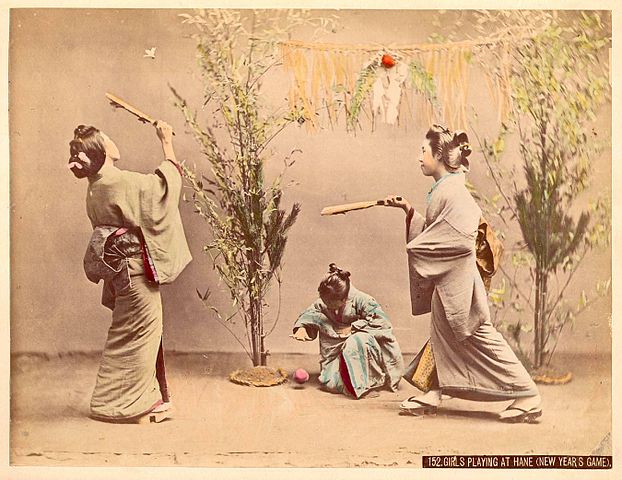
Today is Taiiku No Hi, the Japanese national “Health and Sports” holiday. As this is one of the recurring Happy Mondays, I have written about it before; and because I don’t want to repeat myself, here is a nice old photo depicting a traditional Japanese sport: Hanetsuki gameThe two girls are playing hanetsuki, a form of Badminton, albeit without a net. The goal is to keep the hane – the shuttlecock made from a little hard ball and a few feathers – in the air as long as possible, using only the wooden hagoita. The game is usually played by girls around New Year’s, and the longer the hane remains in the air, the longer the protection thus incurred will last. These days, the game itself is less popular, but the hagoita are still sold. Traditionally their backs show famous Kabuki actors or other celebrities. Hanetsuki can be played by many people, or by one person, but woe befalls the one who drops the hane – her face will be marked with black ink!

The photo above was taken by Kusakabe Kimbei (1841–1934), a Japanese photographer.

Concern

stack of papersIn the middle of  my chaos at home, I have now seen my accountant a second time, and I think I have found myself a real gem! He has already organised all my paperwork in differently coloured folders: red company papers, black taxes, yellow salary; and two more for my invoices and receipts, both incoming and outgoing. I think so far he is up to date with all my paperwork and money issues, but he still has some problems getting the accounting software he is using – and wants me to use down the line – to work on my computer. However, he will take it up with his office, so this should be solved the next time he visits me.

What I found extremely encouraging was his concern with respect to my salary. When setting up the company, I had to prepare a document stating my monthly director’s salary, apparently for tax purposes. Technically, I can pay myself as much as I like, but in my case there is the additional constraint that I have to make the immigration office happy, which means I have a lower bound on the amount I can earn.

Now, the first time my accountant saw this document, he called me to him and told me flat-out: “You earn too much!” His concern was not so much the wellbeing of my company, but my personal one. He explained that with this amount of salary, I will be hit with a lot of taxes next year. I tried to explain why I could not go any lower, but in the end he called my lawyer to get the information first hand – and in Japanese.

I found his concern extremely nice and thoughtful, and as I said, I am very happy about this. I think this will be a very pleasant relationship – let’s hope it will be a long-lasting one too!

Shock

ice cream dishWhen I came to Kyoto in 2013, I found a little cafe in town, and I visit it quite regularly. I especially enjoy this one because they have great ice cream, and the staff are extremely friendly. By now they know me and I can go there and write for hours without being bothered. Usually I go on Wednesday afternoon when I have no other appointments; it is quiet there, and I sit in a little niche upstairs. The last time I was there, before summer, there were some renovations going on, so this was not possible.

I should have investigated further then already, because when I came there today again after a break over summer, I stood, not in front of my cafe, but in front of a newly opened pancake house! I was shocked – no more ice cream! And when the youngster in charge told my they didn’t serve hot chocolate either, I turned on my heels immediately. Of course he had no clue what happened to my cafe…

Thankfully, since this is a Kyoto based company, there is another branch of my cafe in town, and although a bit inconveniently situated, I went there for today’s hot chocolate and ice cream fix. There I learned that the other branch had not closed completely, but just moved to a shopping arcade nearby the old place, and that they had severely downsized. I can only assume that the rent of the old place had been too expensive over time, thus the move.

Personally I am not sure whether this was a good idea, as the new location seems to me less busy than the old one, at least during the week. Oh well, as long as there will be a place for me to go with a free seat for me, it will be okay.

Exhausted

Since my boxes have arrived on Friday morning, I have been unpacking and cleaning and sorting and putting away my things. I am exhausted! And I don’t even think I have that much stuff – it seems there will be quite some empty space left in the kitchen cabinets for example.

However, my apartment still looks messy, with piles of clothes in my bedroom and random ornaments on the floor in my living room, etc. Just passing from one room to another and looking at all of it makes me tired. So far, the only room without piles of anything is my office, but that’s mainly because I haven’t tackled any of the boxes containing office stuff, documents, or books. Those are essentially all the remaining boxes, and they will take quite a while to sort through, I’m sure.

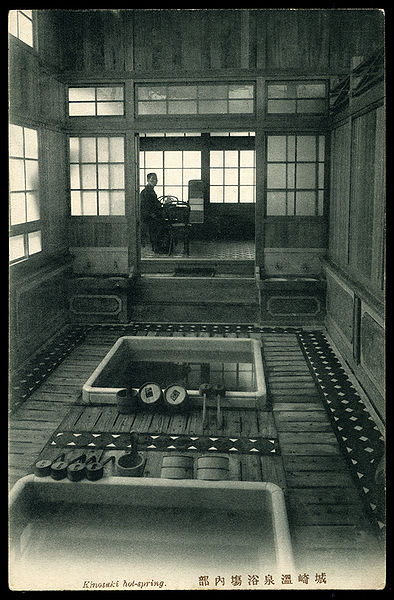
Hence, I have decided that I deserve a break. First I will clean a bit more and put away some more stuff, but later in the evening I will go to the sento nearby and have a really good scrub and a long and really hot bath. I’m looking forward to this! Kinosaki onsen in 1910Current number of boxes left: 11

27

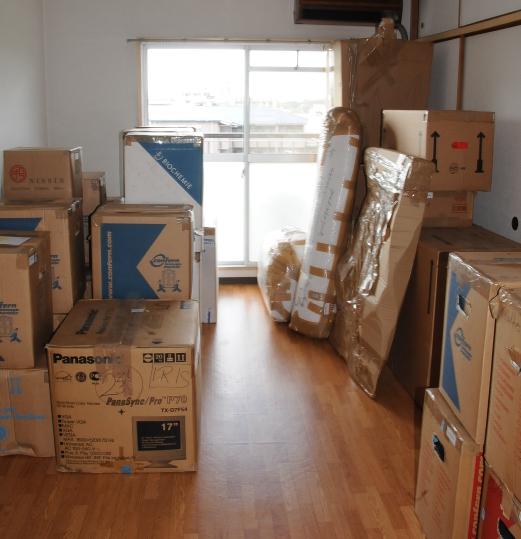
It was a very busy day today, and it’s not yet finished. This morning, at 9 am, the 42 boxes containing all my life so far have been delivered, finally! Everything went smoothly, both guys from the moving crew were very courteous and spoke good English, and although they had a hard time hauling all my books into the 5th floor (remember, no elevator!) all was said and done within two hours, including already unpacking some of the boxes – the large ones in the right hand back corner – you see here:

my moving boxesSince then I have been unpacking with more or less enthusiasm. At first I stood before that mountain and thought: oh my, where to start… but then I remembered that “one box at a time” would be a good approach, and I have been at it ever since. So far, I have already regretted one choice I made when packing two years ago – I could have brought my whole wine collection, the import fee was negligible – and I was already surprised about one or two others – what’s with the cowhide?

However, as I have focused so far on unpacking the boxes with bedding, linens, and clothing, the big surprises and possible disappointments will come once I arrive at the boxes labeled “misc household”… It is very interesting to see all my clothing together on one big pile – all those T-shirts! – and I am actually making a point and an inventory list to curb further shopping sprees, hopefully.

Once my inventory is finished, I may post some of the more interesting numbers here, but for today, only the most important one: 27. That’s the number of boxes still unopened as for now, although I may get to empty one or two more tonight. I’ll update you with the numbers in the next few posts.

2nd kyu!

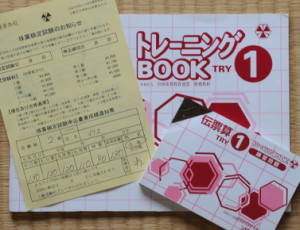
soroban 2nd kyu results and 1st kyu booksLast Saturday was my latest soroban exam – and I passed it!

I am now a sorobanista of 2nd kyu rank, and, according to my friend, this is not very common anymore. In the old days, if you wanted to have certain positions, especially in the government, you needed a 3rd kyu soroban grade, but obviously not many people went beyond that.

Although I made lots of mistakes in the trial tests I took just before the exam, I did quite well during the exam itself. I think there may be even room for further improvement, which in this case simply means a further speed-up. Hence, I am considering taking the exam for first kyu at the next possible date, which is in two months. It is unlikely that I will pass then, but as the next level exam will not be at my school anymore but at some outside venue, I better check out the new setting before attempting the next level in earnest.

Asadora

Today was the start of the 93rd NHK asadora. An asadora is a quite unique Japanese form of TV drama series; its name derives from asa – morning – and dora – short for dorama, the Japanese spelling of drama. Those asadora air daily except Sunday, and they are very short – only 15 minutes for each episode. Even if you miss one of them, there is always a rerun on the same day at noon, and if you miss that one too, there is usually lots of repetition included in each episode so that you can catch up easily. Altogether, the whole series takes six months, so there are two asodora each year.

Since the beginnings of the asodora in 1961, the plot almost always follows the same stereotype: It centres on a young female heroine who is going through great lengths and possible hardships in order to chase her big dream. In the end, she will fulfill all her desires, of course. Some of the stories are even based on real life events.

The nice thing about an asodora is that the heroine is usualy played by a young and hitherto unknown actess. I have heard that there are even public auditions, drawing thousands of young girls, something like “Japan’s next asodora girl” or so, and that this one single role can considerably boost a career.

Now you are probably wondering why I am telling you all this and how come I even know about such thing – after all, I don’t even have a TV. Well, the current asadora edition, called “Asa ga kita” (meaning either: “Morning has come” or “Asa has come”, Asa being the name of the main character), revolves around a young woman from Osaka who becomes well known because of her incredible skills with a soroban. And as young actresses don’t have to know anything about soroban these days, they need teachers. And it so happens that said teacher is the one I have been taking lessons from for the last two years. Yes, I do feel quite proud!

Thus, I know even more background: The shooting takes place in Osaka, and Sensei has been teaching there since June or even May. He says that the whole production is very flexible and that, if the viewers don’t like the direction it is taking, things may still be changed and redone. In the worst case this will mean that he will have to teach until the very end of the airing in March.
logo of asagakita fanpageAlthough it must be very tiring for him, he is also very enthousiastic, and he has received permission to make some sort of fanpage for Asa ga kita, where he talks about soroban, of course. This webpage, by the way, is the reason for our last two soroban-related excursions. Most of it is in Japanese of course, but there are also little tweets and stories in other languages and lots of interesting, soroban related photos. There are also a few English pages, but I know that there are more to come – after all, the person responsible for those is yours truly… 😉

Circus

This silver week, I felt the urge to indulge my inner child and I promptly went to the circus! Together with my soroban classmates I went to the early afternoon performance of Kinoshita Circus on Monday, and because of the holiday, we got probably the last seats at the front side of the arena. Kinoshita Circus has been around for 113 years now, and I have read that it is one of the world’s three largest circuses.

I really enjoyed the experience, there were lots and lots of acts, mostly acrobats of one sort or the other, and the pace, especially in the first hour, was very fast, with subsequent acts almost blending into one another. There were acrobats balancing on a bamboo pole or a tower made with chairs; trapeze artists and performers hanging from the ceiling on long strips of cloth; jugglers and dainty ballerinas, magicians, and a troupe of motorcyclists driving circles in a not overly large metal globe. Almost all of the artists working above the arena were secured with ropes – and the trapeze troupe used the traditional net – except for the two guys on the wheel of death, which had me gasping for air several times. Check out the images at the circus’ homepage to get an idea – I did not bring my camera, but it was not allowed to take pictures anyway.

Of course, there were acts involving animals, and I am always quite ambivalent about them. On the one hand, I enjoy seeing the animals, but on the other hand, it is obviously impossible to provide them with the environment they require while they are on tour. I was glad that three of the four acts were very short, probably less than five minutes each. The poor elephant had to do a handstand and carry his trainers on his back, but the zebras and the giraffe – which was fed with bananas by selected audience members – were only circling the arena twice before they could leave again.

The second hour of the show started with the main act: Eight white lions, two of them male. I love cats, especially the big ones, but as I said, I also feel sad for them. The act was nothing special, and to me it would not have made a difference at all if they had not shown any animals at all. However, a large part of the audience were small children (I think we were the only group of adults-only there) and it may have a different impact on them.

We did not rush out immediately after the show with the rest of the audience, and we thus had the opportunity to talk to the clowns. What I had already noticed with quite some surprise during the show, they now confirmed: There were lots of foreign artists, they themselves were Americans, but all of the Asians were Japanese. I guess that the ratio was maybe half-half, and I thought that this sounds like a very cool idea to get a working visa for Japan. I wonder – if my company idea does not really work out – whether I can still take up juggling or so? On second thought, nah, I’d probably make a better clown…

Equinox

Mondrian painting of red amaryllisToday is the last holiday of this year’s Silver Week, the autumnal equinox, which is called in Japanese Shubun-no-hi. Three days before and after the equinox is the time the Japanese call higan, which can be translated as “the other side of the river of death”. At this time, people pray for the repose of their dead ancestors and make visits to the family grave where they place small offerings. A popular offering is a rice dumpling covered in red bean paste (of course), called ohagi. Also around this time, when autumn begins, red amaryllis begin to bloom, and the Japanese call them higanbana – equinox flower.


Silver Week

It’s national holiday in Japan! Actually, there are three national holidays in a row this week, which means the Japanese call this the Silver Week in imitation of the Golden Week, a string of three national holidays in early May.

This Silver Week starts today with Keiro-no-hi, the Respect for the Aged Day, and there is Shubun-no-hi to celebrate the autumn equinox on Wednesday. Apparently the Japanese government is trying to get their citizens to like them better, so they inserted another national holiday without great name in between, tomorrow.

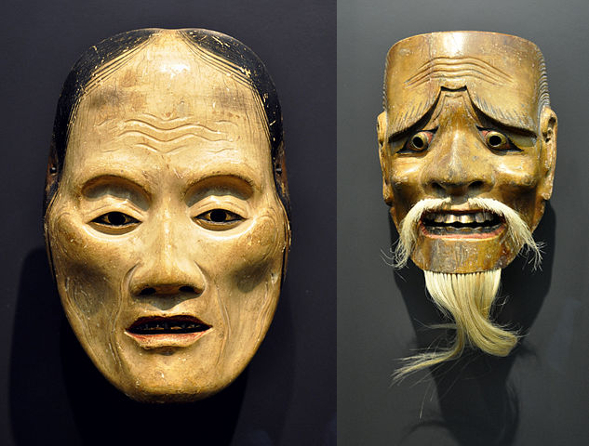
I have written about Keiro-no-hi extensively last year, so I will not repeat myself, but rather present more Japanese art! This time, it’s two masks used in the Noh theatre, now in the possession of the Museum Rietberg in Zürich. The old woman on the left dates back to the 18th/19th century, and the old man on the right even to the 16th/17th century. Noh masks of old woman and manBoth photos are courtesy of Andreas Praefcke, taken from wikimedia commons.