Jonan-gu is a shrine in the south of Kyoto, near Takeda station. It is said to date back to the establishment of Kyoto as Japan’s capital in the 8th century, but written history talks about it from the 11th century, when retired Emperor Go-Shirakawa built the so-called Jonan Rikyu villa around the shrine. The gardens of the villa were extensive and became a popular watering hole for the aristocrats of the time. Even nowadays, the gardens of Jonan-gu are its most impressive feature, especially since the shrine buildings had to be replaced after a fire in the 1970s.
The Rakusuien Gardens of Jonan-gu measure an enormous 30.000 square metres. They were designed by famous garden architect Nakane Kinsaku in the 1960s, and comprise five different garden architectures that each mirror a popular garden design of a historic era. Altogether, the garden is home to about 150 plum trees, 300 camellia bushes, and 100 maples, which give the gardens a beautiful and changing atmosphere throughout the seasons. Furthermore, all the 80 plants that are explicitly mentioned in The Tale of Genji can be found in Rakusuien, and strolling through it gives the impression of taking a long walk through time.
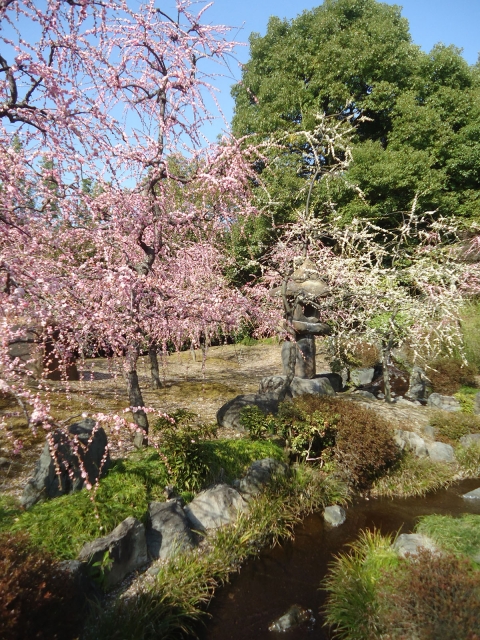
When entering through the gate at the west side of the shrine precincts, at first there is Spring Mountain, which boasts many beautiful pink plum trees in April, but is not quite so impressive during the other seasons.
 Walk behind the honden – the main shrine building – into the eastern part of Rakusuien, the Heian Garden, which is dominated by water: With a pond, a waterfall, and a little stream winding through, these types of gardens were popular among aristocrats of the Heian period.
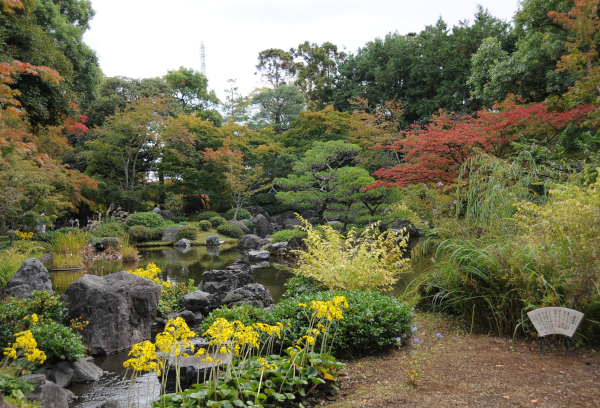 Further along the path, you must cross the main road of the shrine and enter the southern part of Rakusuien, which boasts three different garden styles. First, there is the Muromachi Garden, where majestic stones surrounding a large pond dominate the scene. There is meaning throughout: the quiet Medaki waterfall in the foreground is considered female, the big one in the back – Odaki – is male. Horaijima island – the island of the immortal hermit – features pine trees as symbols of longevity. And the three large rocks on the other shore are meant to be Buddha and two Bosatsu, residing in the ideal Buddhist World. This part of the garden is especially beautiful during the autumn colours and in April and May, when wisteria and azaleas bloom.
 The second garden you will encounter is the Momoyama Garden, whose large open lawn is meant to reference the Pacific Ocean. The trees at the back represent Japan’s mountains, and the black rocks within it the Japanese islands off the coast. Look for the pine that looks like a ship at the back right. This symbolises a European ship coming to Japan – Japan’s Momoyama era indeed saw the first Western people arrive from Europe.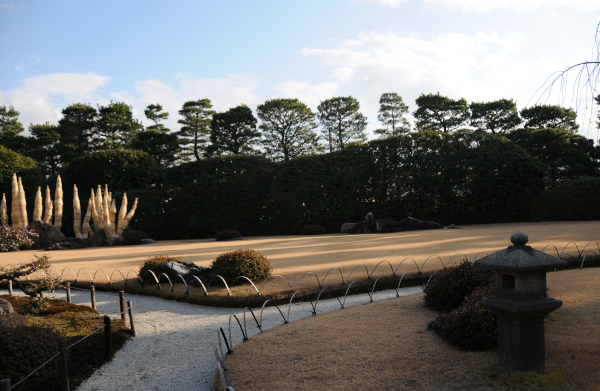
Take your time admiring both Muromachi and Momoyama Gardens from the Rakusuiken Tea House that lies right between them. Enjoy the view from there with a cup of green tea and a seasonal wagashi sweet. When you are ready to move on, have a look at the small Suisekitei gallery, where exhibits pertaining to the history of Jonan-gu are on display.
On your way towards the exit, you will see Jonan Rikyu, the third and last of the southern gardens. Again, this is a karesansui garden without water. This garden is meant to depict the time when Jonan Rikyu dominated the area, and again, there is a lot of hidden meaning in the design: The stones represent the river Kamo, the white pebbles the pond of the imperial villa, and the big rocks in the garden are supposed to be the old buildings.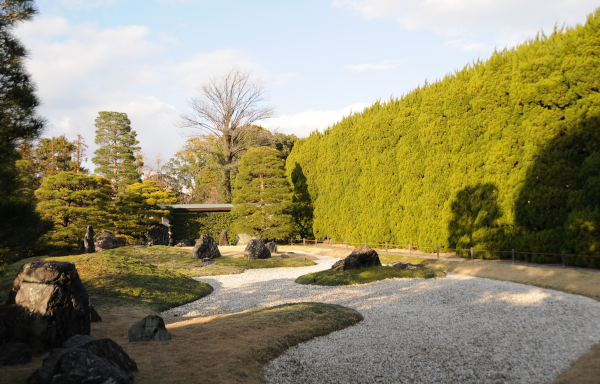
The Rakusuien gardens of Jonan-gu are worth taking the trip down south at any time of the year. And because the shrine is a bit off the beaten tracks, there are rarely enough visitors to make it feel crowded. I have only been to Jonan-gu in November and January, but I have seen stunning pictures of Spring Mountain, well, in spring. The one on top is not mine and by far not the best one out there! I guess I will have to take the trip down again next year!

 In case you were hoping for a picture of me in one of those pink onesies with bunny-eared hoodie, I have to disappoint you: I didn’t go quite that far. I did go pink though and bought a pair of … let’s call them boots, to keep my feet warm which is really important because I am feeling very uncomfortable – to the point of getting cranky – when I have cold feet (or a cold back, by the way). I agree, these things are not quite as cute as I had hoped for, but as they are made of glorified plastic, aka polyester, they do what I expected of them – keeping my tootsies warm.