Cool Days

I don’t know where you are living, but I have the feeling that it’s much cooler than usual in Kyoto. Right now, the tsuyu rainy season should be starting with lots of rain that drives up the humidity, and at the end of it, it should be almost unbearably hot.

But, nothing of the sort, for the time being at least. Although it is pretty overcast, there is not much rain and definitely not the downpour we should be having. Temperatures are in the usual range just below 30 degrees, but in the nights it cools down pleasantly. Humidity is okay, you only sweat when you’re actually moving, so that’s definitely good.

raindrops on a windowI usually don’t think much of these things because it’s easy to fall into the “last year everything was different” trap, and it’s not as if I keep track of the weather over the years. But today, my Japanese teacher mentioned that it was rather cool outside for the season, and I was happy to agree with him.

In fact, I have the feeling that the whole year is a bit “later” than usual, starting with the sakura already. Of course, there is always some sort of variation to weather phenomena, so that’s nothing unusual. Still it seems as if global warming is creeping up on us, even here in Japan…

Gotōchi Formcard

A modern post office goes beyond selling stamps and being a place where to send parcels and letters. Nowadays, you can also buy stationary, postcards, cardboard boxes to pack your stuff in it…

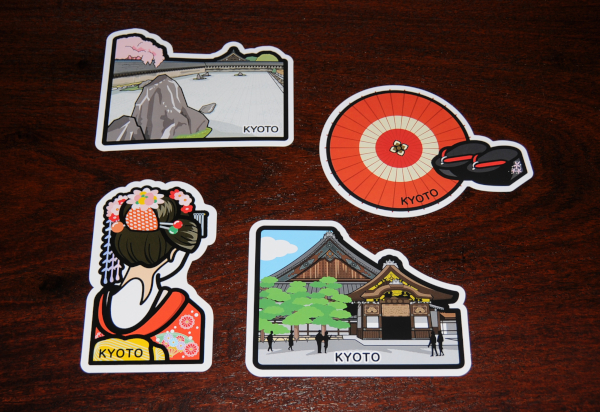
In Japan, every post office in a city that is frequented by tourists – whether Japanese or from abroad – sells special postcards called gotōchi forumukādo (ご当地フォルムカード). Literally that means “local formcard”, and these are fun postcards that depict some of the most iconic tourist spots or things of that particular city and are often shaped accordingly.

In Kyoto, these formcards of course have something to do with Geisha, and there are also a few of Kyoto’s most iconic temples and even tsukemono, which are pickles and the main souvenir from Kyoto, for Japanese tourists, that is. What do you think of these? Do you recognise the two places?

Gotoji Formcards from KyotoPostage varies according to size, but these cards can be sent abroad as well. However, the clerk at the post office suggested using an envelope for destinations outside of Japan, just to make sure they arrive unharmed.

Closing

Nearby my home there is a big shopping centre that is being even further enlarged at the moment. In the basement there is a supermarket and a food court with a number of small eateries, and the first and second floor houses mainly clothing stores, a book shop, opticians, and a pet store selling cats and dogs and smaller pets like birds.

In the last few weeks there have been closing sales at no less than seven shops, all of which have been open since at least the time I moved in here. Five of them sell shoes and clothing, but one of them is a store for handbags and luggage, and another one is a 100 YEN shop. I am baffled and I’m seriously wondering about the reason for this.

Is the economy going downhill again? But none of these stores were especially expensive, and that the 100 YEN shop is closing does not speak for this theory. Maybe the owner of the shopping center has raised the rents? That is possible, but the new extension will not open before December, it seems awfully early to raise the rents now already.

running shoes on display in a shopIn any case, I’m getting plenty of goodies out of those closing sales. Many of my T-shirts are in their final death throes, and a pair of new sneakers was equally welcome. Apparently, there is a silver lining to everything…

Hakodate

I’m back! 😉 You probably didn’t catch the book reference, but last weekend I visited Hakodate on Hokkaido, which is just on the other side of the Tsugaru Strait, where Ozamu Dazai walked in the 1940s.

Hakodate, founded in 1454, is the former capital of Hokkaido, at a time when the island was still called Yezo and was mostly unexplored and inhabited by “scary” Ainu, the people indigenous to Japan. Hakodate is an interesting city because in 1854 it was the first port to be opened to foreign trade and thus it had a large influx of foreigners from many countries.

This can be seen in two ways: In the old town, there are houses that are distinctly Western style, and made from bricks even. The old quarter also has many churches and foreign consulates, unfortunately, not all of the old houses are in a good state, although there are some renovation efforts going on. For Westerners, the houses look nice but not something we haven’t seen before, but the Japanese love visiting Hakodate for the “foreign flair”.

Russian Orthodox Church in Hakodate

At the edge of the old town, there are several cemeteries for foreigners, strictly separated by country of origin or religion. There is the Russian cemetery, the Chinese cemetery, a catholic cemetery (which also has graves of local Japanese Christians – as I said, there are many churches here) and a cemetery for foreigners in general.
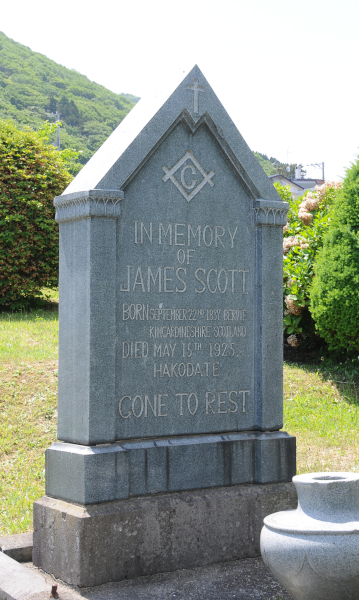
Tombstone on the foreign cemetery in Hakodate

Another interesting part of the old town is down at the harbour, where there are old warehouses made from red bricks, that now are home to a great number of (souvenir) shops and other stores. From there, it is not far to Mount Hakodate which has a wonderful view over the city which is especially beautiful in the night. Of course, we went up there as well, and we could even see the lights of Aomori on the “main land” of Japan.
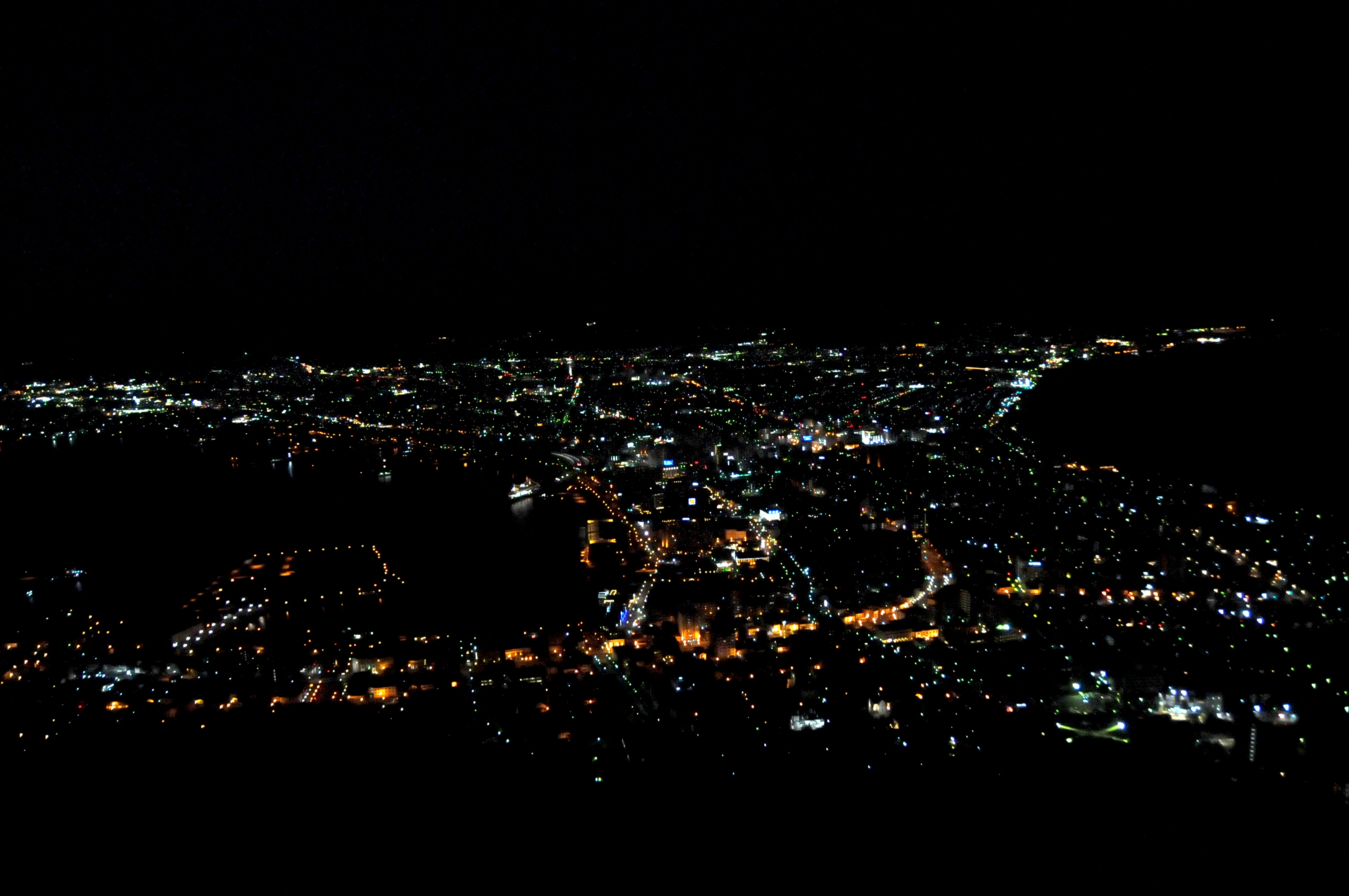
Night View over Hakodate

My personal favourite, however, was the Goryokaku Fort, a traditional star fort built a bit more inland that was meant to protect the government offices that were relocated inside, once the fort was finished. It reminded me of similar forts I had visited in the Netherlands, but it seems that such forts have been built all over the world, from Europe to the US and even Asia (probably during European colonisation).

Old Magistrate Building in the Goryokaku in Hakodate

My friend and I had a great time even though we had to cram all of the sights into less than two days. We have seen almost all of them and on Sunday, we walked altogether 14 km… At first, the idea was to walk up Mt. Hakodate for the nightly view, but in the end we decided to just take the cable car. We also visited the Museum of Northern Peoples with interesting exhibits of not just the Ainu, but other peoples from northeast Russia as well.

Ainu Clothing

There are two things I’m slightly miffed about: First, I don’t think I got enough fish and seafood on my trip, something Hakodate is famous for. Unfortunately, my friend doesn’t like fish at all, so we had to compromise. She would have been fine with eating onigiri all the time while I had my fish, but that’s not fair; after all, I can have seafood everywhere else. I also wanted to stock up on cheese which is really expensive in Japan, and since Hokkaido is famous for its dairy products, I was hoping for lots of choice for a fair price. Not so! It seems that they prefer to make sweet things (like cheesecake) out of their milk, and the little that is turned into “real” cheese is still almost prohibitively expensive…

Altogether, I had a great trip though. My friend is fun to be with, and we have a similar way of approaching sightseeing, so that was perfect (even though she is in better physical shape than I was). This was my second time in Hokkaido, and I found it very pleasant. I guess I’ll be back, eventually… To finish this already long post, here’s a list of some striking things I noticed in Hakodate:

  • the air is so clear and fresh!
  • private houses have a closed glass porch before their entrance door (and indeed, it was quite windy)
  • there are people smoking on the streets (you don’t see much of them in Kyoto)
  • there is SO MUCH SPACE! Wide streets, buildings with gardens…
  • In case of a tsunami, much of Hakodate would be flooded.
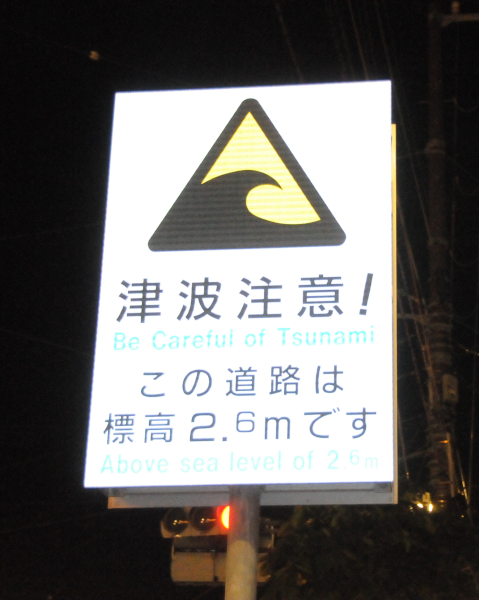
Tsunami Warning in Hakodate

Return to Tsugaru

Return to Tsugaru
Osamu Dazai

Return to Tsugaru

Tsugaru is the old name of the northernmost peninsula of Honshu, which today makes up part of Aomori prefecture. The people in Tsugaru have always been poor and, as the part of Japan from which to set sail for Hokkaido, has had a reputation of a certain backwardness in cities like Tokyo.

Osamu Dazai, considered among the foremost Japanese authors of the 20th century, was born in Kanagi, a small town on the Tsugaru peninsula. In this memoir from 1944, he takes us on a trip to his hometown and nearby places, like the castle town Hirosaki, the village where he went to school, etc. Travelling chiefly on foot, he pays visits to family members and relatives, as well as old friends, where he is always welcome and served sake and crabs, his favourite food.

This book is part travelogue, part history – both of Tsugaru and his own family – part commentary on current events and the wartime of 1944. Throughout the book shines Dazai’s deep love for the land and the people living there.

Osamu Dazai was the pseudonym of Shuji Tsushima, born in 1909 as the eighth (surviving) child of a man from humble origins who eventually became a respected local politician. From an early age on, Shuji wanted to become a writer, and he eventually moved to Tokyo as a student of French literature. Aged only 26, he was nominated for the very first Akutagawa Prize, and although he did not receive it, his reputation was made. His most important works were published after WWII. Always the family’s enfant terrible, he finally committed suicide with his mistress in 1948, at only 39 years of age.

This book is a classic, and after all these years, it is still available on amazon.

Assistance please!

Just a very short call for help please:

Recently, I have set up a website analytics tool (matomo) for my work website What’s up in Kyoto. I have used matomo before when it was still called piwik, and I was very happy with their approach to privacy and everything.

However, with their change from piwik to matomo, something else must have changed too because the statistics for What’s up in Kyoto and all the other sites I’m monitoring have dropped considerably. It also seems I don’t get any referrals anymore from facebook or twitter or this page to the What’s up in Kyoto page, which is possible but not realistic.

What's up in Kyoto square logoI would greatly appreciate it if you who are reading this could visit my What’s up in Kyoto site either by clicking the link above or the image. It’s just to check if the referrals from this site are tracked or not.

Just so that you know, I am not able to see any of your personal information. I have set up matomo’s tracking for maximum privacy protection while still giving me useful data. For example, I only get part of your IP address up to country level. So, while I may see that you’re in Germany for example, I have no idea what city you are in. This is makes it practically impossible to find out who you really are – there are some 80 million people living in Germany 😉

Thanks for your help!

Repercussions

Tonight, I had a very interesting discussion about Kyoto city’s policy regarding LGBTQ people. It has just been decided that job applicants for any position in Kyoto city are no longer required to indicate their gender on the application form. This is a measure to protect people from the LGBTQ community (mostly, T people, that is) and Kyoto is among a number of other big cities who did this or similar things (like Tokyo or Osaka). It will take a long, long time to trickle down to smaller cities and villages in the countryside, but it’s a start.

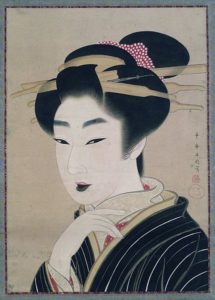
Japanese GeishaThe funny thing is that this measure has interesting repercussions – for women in particular. Without the required declaration of male vs. female, the statistics as to gender proportions in Kyoto city’s workforce will at best not be accurate any longer, at worst disappear at all. Of course: who cares? It’s not that important, is it?

Hint: Gender equality / affirmative action. Kyoto city is also committed to gender equality and tries to hire more women into their ranks. But without any kind of data as to gender, how do you know that you have “enough” women in the “right” positions?

Kyoto city employs thousands of people, from the mayor all the way down to people who cut trees and mow the grass in public places. It’s not as simple as walking through the offices and counting people… That’s an interesting problem, isn’t it? I’m sure Kyoto city will find some solution, but it does show that no decision stands completely isolated on its own.


Sokushinbutsu

When browsing youtube the other day, I found an extremely interesting video about Japanese monks who turned themselves into Sokushinbutsu, Living Buddhas.

“Living” is not a good word though, since these monks practised extreme asceticism in order to have their body mummify after their death. This was an extremely rare religious practice to enter Nirvana and to thus help the people who stay behind on earth.

It is said that this practice originated in China and the founder of the Shingon sect of Buddhism, Kukai (aka Kobo Daishi), brought it to Japan upon return from his studies. It is believed that hundreds of monks attempted to become Shokushinbutsu, but only 24 mummified Japanese monks are known. Some of them can be visited in Northern Japan, in Yamagata prefecture, where most of these monks lived.

Here is the video (6:52), but be warned: it’s graphic!

Since I do have an interest in anything morbid, I can definitely recommend Caitlin’s channel. She is a funeral director in Los Angeles and has written a number of books related to death.

Exhibitions

As I mentioned some time in the beginning of the year, this year I’d like to learn more about art. Part of it is work-related: The monthly highlights on my What’s up in Kyoto event calendar page this year are the small museums of Kyoto. And part of it is simply personal interest; my highschool was a sort of vocational school for business, so we didn’t do much into art or general knowledge (I’m sketchy on history too, but that’s something to tackle for another year).

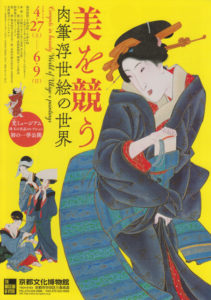
Flyer of "Compete in Beauty" ExhibitionSo, I’m visiting Kyoto’s museums and exhibitions left and right… This week, together with a Finnish friend of mine, I went to see an exhibition of Ukiyo-e paintings. Yes, paintings. Neither my friend or I had been aware that ukiyo-e doesn’t just mean woodblock prints, but also genuine, original, one-of-a kind paintings, often produced by the same artists. Most of the paintings we saw depicted beautiful women, which is a subcategory of ukiyo-e called bijinga.

It was a fascinating exhibition with paintings spanning more than 100 years, and there was even a display case with wigs showing different hairstyles of women of different ranks throughout the Edo period. One of the attendants told us that we should look for cherry blossoms in the paintings – those were used to emphasise that the woman in the picture was regarded as especially beautiful. It’s little things like this that you need to know to really understand the meaning of paintings. I love to find out more over time!

Going Out

I just came home with the last bus. A friend of mine wanted to see an exhibition this afternoon, and we went together and after dinner we decided to try out a few bars she had heard of. It was a nice evening with fun and many cocktails… Interesting tidbit: Some bars in multi-storey buildings don’t have a sign on the door…