Just checking in to tell you that all is fine over here. I’m just super busy, trying to do 5 things at the same time….
Next update coming soon!
Made Official

Just today, I received the documents for the property registration. That means that now Kyoto City too knows that the house is mine. I am quite surprised about the speed with which this happened – only seven days after the purchase. In Austria, this procedure alone can take months to complete. Most of the time, people are already living in their new home before the official registration is completed!
As I mentioned, this will still take a bit more time for me because of the renovations. Yesterday, I went to the house to take measurements and spend some time there, daydreaming… I mean: planning things. While I am eager to start the renovations and get moving, first I need to figure out what I actually want with the rooms. There’s not much point in hiring somebody to “fix my house” if I can’t explain what I want to have done.
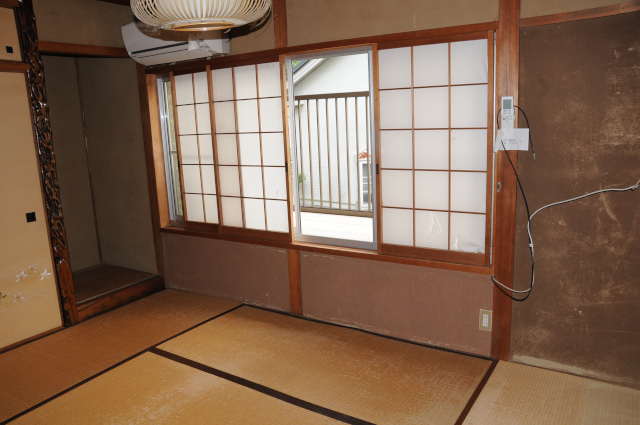
Some things will also need a bit more attention than I thought at first. There are veritable holes in some walls! And where the hell do all those cables come from/lead to? But overall, I’m very happy about it. So much so, that I already left my scent mark in the form of a roll of toilet paper. Not that I can use the toilet because the water’s not turned on again, but still. Baby steps!
Koto
What do you “hear” when I ask you to think of traditional Japanese music? Is it the shakuhachi, the bamboo flute, or the shamisen or biwa, guitar-like string instruments? Most likely, it’s the soft tones of the Japanese koto, ubiquitous in many videos about Japan.
The koto is one of Japan’s string instruments, a large zither-like instrument with origins in China. It’s made from Paulownia wood, is 180 cm long and has typically 13 silken strings. It is played with the right hand (using fingerpicks) and the left hand is used as support and to move the bridges that are used by tuning – sometimes even during the performance of a piece.
As mentioned above, and like many other things, the koto has its origins in China, and it was introduced to Japan somewhere in the 7th or 8th century. It is already mentioned in the Genji Monogatari of the 11th century, so it must have been quite widespread at this time already.
There once were different types of koto, and interestingly, as far as professional musicians go, these were exclusively blind men in the beginning. Only when this rule was changed, were women allowed to play and to teach the instrument. For this reason, many of the traditional songs were written by men.
With the westernization beginning with the Meiji Restoration, koto music, together with other Japanese traditions, lost a lot of its appeal for the Japanese, who were more likely to study the violin or other classical instruments of the Western canon.
However, Michio Miyagi, a blind man who reached the highest rank of koto performer when he was just 18 years old, created many new songs in which he combined the traditional and the Western style of music. His piece below is called “Tegoto” and I like it because it is so dynamic and shows off not only the instrument’s unique sound, but also the player.
The sound is not the best in this video, but you can see the hands of Ms. Kimoto at every note of the song. Enjoy!
Mine

So, this is the “really big thing” I was talking about beginning of September. And since yesterday, it’s officially mine.
A bit of background: I’ve been looking for a house on and off for about a year now. I’ve seen around 15 houses in various stages of (dis)repair, from recently renovated to barely holding together. Finding something decent is even harder if you have specific wants, like sunlight, coupled with a limited budget. So, I’m very happy this house came on the market at just the right time.
Although, technically, it was never “on the market”, at least it wasn’t widely advertised as for sale. Back in early August, my friend Junko and I were visiting another property of a real estate agent when he mentioned “oh, this one’s just in”; it didn’t even have a price tag yet. It took a bit of back and forth on the price on his end, and a bit of back and forth on “do I or don’t I” on my end, but it’s all over and done with now.
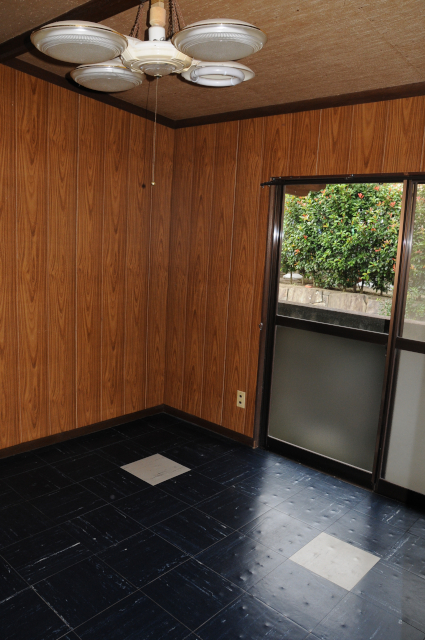
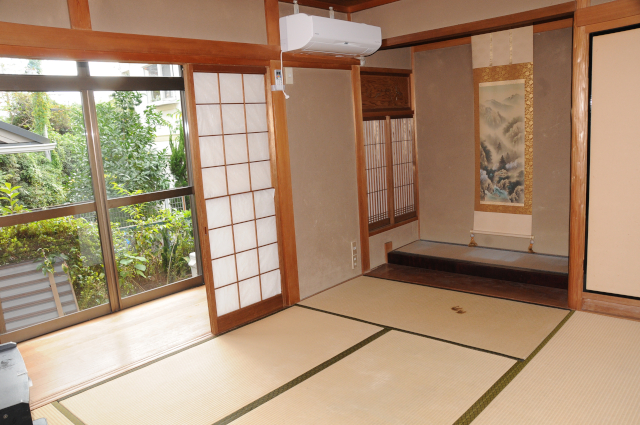
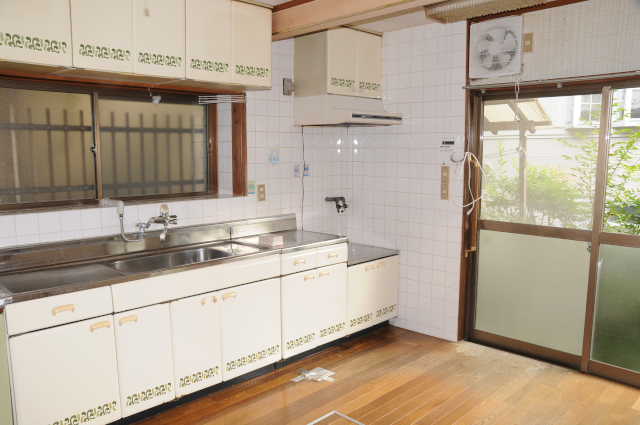
A few details: The house is 53 years old, and around 90 square meters big on two floors. It’s a bit farther away from the city centre than I originally wanted (even farther than my place now), but it makes up for the extra travel time: It lies in the Higashiyama mountains in a very quiet neighbourhood, and it is open to the south side, so the living space is very sunny.
As you can see from the photos below, it does need some renovations before I can move in; it was empty for about a year. But these are mostly cosmetic changes, the underlying structure is very good. Essentially, I am thinking of remodelling the first floor to Western style with an office, kitchen and living room; while leaving the second floor and its tatami rooms mostly intact. Don’t worry, I’m going to post more details about the renovations, you’ll probably get sick of them soon…
I am not sure when I’ll be able to move; end of October seems overly optimistic, but then again, I’m not planning on a complete overhaul of the new place, and Japanese companies are super efficient. Wish me luck!


Coin Locker Babies
Coin Locker Babies
Ryu Murakami
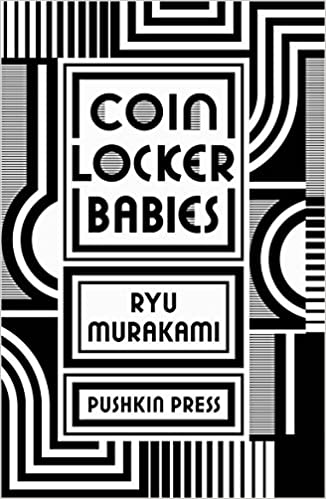
When Kiku and Hashi meet at an orphanage, the two boys quickly bond and become friends, because of their shared history: Both were abandoned by their mothers in coin lockers at train stations in Tokyo. They are adopted by parents from a rural village where they grow up together, but at all times they keep harbouring the wish of finding their mothers. As young adults, both leave the village and return to Tokyo where they end up in Toxitown, an abandoned plot of land within the city where outcasts, criminals, and other lost cases end up. Hashi eventually escapes to become a successful singer, but in the end, Kiku’s destructive tendencies will catch up with both boys.
An interesting story of two boys looking for the love of a mother they never knew. While each of them seemingly finds their own solution to the feeling of loss, in the end, they both succumb to violence and self-destruction. It would not be a book by Ryu Murakami if they didn’t…
Ryu Murakami was born in 1952, and started his artistic career as a member of a number of bands, before moving on to film and writing books. His first book, written in university, won him the acclaimed Akutagawa Prize for fiction, only the first of many more prizes to come. A number of his novels have been turned into films. Most of his works center around the dark side of humanity, they describe sex, violence, drug use, and the abysses of the human soul in general very graphically, and are not for the faint of heart.
If you want to try anyway, Coin Locker Babies is available on amazon.
Photogenic Cat Exhibition
We had a holiday today, the autumnal equinox. I’m still very busy with work; there are four projects I’m involved in right now with European clients; with steep workloads and tight deadlines. However, somehow this week all four got delayed for some reason or other, and when I hadn’t received a single job this morning, I jumped at the occasion and took the day off.
I now have to admit that I was very naughty. Instead of staying at home reading, as I would have done otherwise, I joined friends of mine on a day trip to Otsu on Lake Biwa. Why naughty? Because we’re still under a state of emergency until the end of the month; we shouldn’t travel at all, and definitely not across prefectural borders…
However, all four of us have been fully vaccinated; the venue is less than 30 minutes drive away from my place (and 11 minutes by train from Kyoto station); and I guess that half of Otsu’s population work in Kyoto or Osaka anyway. “Dear God, please make sure I always have an excuse handy.”
This is why we didn’t think twice when Kosuke Ota announced his exhibition “The Story of Biwako Cats”. Ota-san is a retired war photographer who worked in the Yugoslavian war, in Iraq etc. In his retirement, he moved to Otsu and documents the feral cat population that roams the area around the Biwako Otsukan, where the exhibition was held.
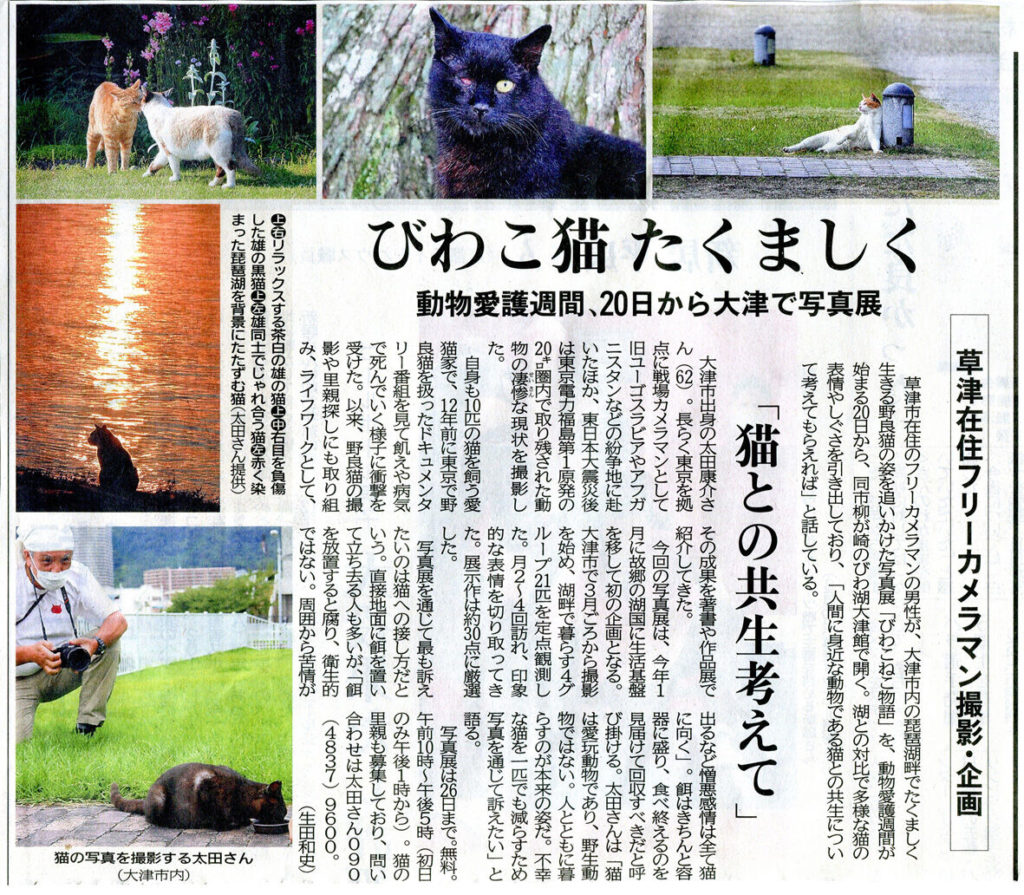
We met the photographer there, who kindly signed two of his books for my friend. And afterwards we had delicious Belgian waffles in the restaurant on the first floor. Towards late afternoon, we met some of the cats starring in the exhibition and took some pictures of our own (not quite so masterfully though).
I had a great day, and it was worth going out. This is the first time I left Kyoto since last October, when I went on the Lake Biwa Canal Cruise – for which, I now see, have never posted any pictures… Well, it’s been almost a year, so it’s time for that soon.
Fully Vaccinated

Time for celebrations – I got my second Corona shot yesterday afternoon! I was fine yesterday evening and today as well, but now I’m working up a bit of a fever. Nothing serious – yet – so I’ll just put myself to bed with some hot tea and my grandmother’s sure-fire cure for colds. I’m sure I’ll be fine again tomorrow.
I’m glad I am finally fully vaccinated, there were some bumps on the road initially. As mentioned before, I registered for my shots in the beginning of July and expected a quick turnaround. Unfortunately, there were supply problems, so Kyoto Prefecture stopped all vaccinations for about 3 weeks. So, my first appointment was only on August 14.
But once the schedule was fixed, everything went smoothly. We were asked to arrive 10 minutes early, and then we were taken through the procedure in small groups of 4 people to minimize waiting time. There were 6 stations for my first shot, and 5 for the second one (no need to make another appointment), from name taking to health checking to the actual jab.
Excepting the waiting time before and after, the whole procedure took only 10 minutes. Everything was super organised, the volunteers – many students but also adults – were very friendly and patient, and I felt well taken care of. Japan for the win!
Anyway, not much is going to change with respect to masks and other restrictions. With relatively low vaccination rates (some 40% have received both, 50% only one shot) and the delta variant breezing through the country, we’ll be lucky if there’s no further lockdown, pardon me: state of emergency. I’m not very optimistic though…
Anyway, off to bed with tea and a book. See you soon!
Sushi in Film
I spend too much time online. On youtube in particular. There are many interesting videos out there, mostly about cats, but every now and then, something else catches my eye. This one is fun: a master sushi chef from Tokyo rates the skills of other “chefs” as seen in movies or on TV.
Sushi master Endo Kazutoshi looks at nine sushi scenes from popular TV shows and movies and rates them based on realism. Endo is a third-generation sushi master specializing in the Edomae style of sushi, a technique particular to Tokyo. He was born in Yokohama and has been working in kitchens for 26 years.
From the video description.
Still Busy…
Wow, I’m still swamped with work. A number of new projects that I’m involved in have started and we’re still kind of feeling our way through them. Then I have daily meetings where I have to out of the house *gasp* every day until next Tuesday, which will not help with the workload. And on top of all that are a number of private emails I have to answer and most of them are going to be pretty long. How is it that there’s nothing much for weeks and then everything happens at the same time? Standard work conditions for the self-employed I guess.
So, sorry for another super short post where I’m essentially telling you that not much is happening.
But: big things are afoot. Really big things, and I think I’ll be able to share them with you in a couple of weeks, if everything runs smoothly. So, bear with me for a bit longer, please.
Musashi
Musashi
Eiji Yoshikawa

Takezo and his best friend Matahachi barely survive the battle of Sekigahara in the year 1600. Upon returning to his village without his friend, Takezo incurs the wrath of Matahachi’s mother, but he is saved by the travelling priest Takuan Soho who becomes Takezo’s teacher for the coming three years. Afterwards, Takezo – now calling himself Musashi – travels through Japan to study swordsmanship and to challenge other famous fighters. However, he soon learns that brute strength alone is not sufficient to win, and he begins to study calligraphy and painting, wood carving, and even farming. On the path to ever refine his Way of the Samurai, he makes a number of influential friends, and even more powerful enemies, until it comes to the great duel with Sasaki Kojiro, another of the great wandering samurai of his time.
Miyamoto Musashi is probably the best-known swordsman of Japan. It is said that he never lost a duel, and he has 61 victories to his name, more than any other samurai. This book depicts about 15 years of his life, from the battle of Sekigahara to the duel with Sasaki Kojiro. In this fictionalized biography we nevertheless meet a number of real people who influenced him, like Honami Koetsu, Takuan Soho, Yoshino Tayu, and of course, Sasaki Kojiro, another great swordsman of the time who eventually becomes Musashi’s arch enemy. Overall, the story is that of a reluctant hero trying to find his own way.
Eiji Yoshikawa, born in 1892, began his literary career when he was 22. During his 30s, he worked as a journalist, but kept writing short stories and novels that were often published as a series in newspapers and magazines. He received the Cultural Order of Merit, the Order of the Sacred Treasure and the Mainichi Art Award. When he died from cancer in 1962, he was considered one of the best historical novelists of Japan.
If you’re in for an excellent novel about one of the great figures of Japan, this book will do the trick. Get it from amazon.