Takoyaki

Takoyaki, or octopus balls, are probably the most widely spread form of Japanese fast food (yes, it does exist). Their origin lies allegedly in Osaka in 193r, but by now you can find them all over Japan; mainly sold by street vendors at all sorts of matsuri, but there are some restaurants specializing on takoyaki as well.  street vendors making takoyaki

Takoyaki are made from a wheat based batter similar to the one pancakes are made from (but with dashi, a kind of fish soup, instead of milk). The most important part of making takoyaki is the right type of pan: it has half sphere shaped moulds and is often made of cast iron to allow the takoyaki to cook evenly. It is fun watching street vendors prepare the food, and, as they are very popular and take quite a long time for fast food, you will have ample opportunity while you’re waiting in line… Essentially it goes like this: First, the pan is filled with the batter, then, the other ingredients are spread on top: pieces of boiled octopus and finely chopped green onions and a little bit of red, pickled ginger. More batter can be added on top now, but you’ll have to wait until they are cooked a little, before they are turned over (thus forming a ball) with a little pick.

takoyaki ready to eat

Once the takoyaki are finished, they are taken out of the pan with a pick and put on a plate (or into a plastic box if it’s takeaway). They are then coated with takoyaki sauce (or worchester sauce) and liberally sprinkled with dried bonito flakes and green seaweed powder. On top of all this goes mayonnaise – if so desired.

I like takoyaki very much, and I have them often at a matsuri, mainly because they are so easy to eat – with toothpicks. After several scalding incidents I have now finally learnt to tear each takoyaki open just a little bit and let them cool off before eating them – the inside can be very hot indeed and has probably burnt many a palate…

Golden Week

Today is right in the middle of Golden Week, a string of four unrelated holidays all occurring within seven days during the end of April/beginning of May. Many shops and all offices are closed, and lots of people take time off to travel, both domestic (I expect Kyoto to become quite crowded) and internationally (people fly as far as the US West coast or Europe). This means that during this single week, many hotels and airlines demand higher prices than usual, so I am planning to stay in town – there is enough to see and do…

Golden Week - CalenderThis year, as one of the holidays falls on a Sunday, May 6th is also a holiday (because there can be no national holiday on a Sunday in Japan – I like that idea!) Anyway, the four holidays mentioned are the following:

  • Showa-no-hi (Showa Day) on April 29th. It celebrates the birthday of the previous emperor, who died in 1989.
  • Kenpo kinenbi (Constitution Day) on May 3rd marks the anniversary of the 3rd May in 1947 when the new Japanese post-war constitution was put into effect.
  • Midori-no-hi (Greenery Day) on May 4th is dedicated to nature and the environment. It also goes back to the Showa emperor who was especially fond of plants.
  • Kodomo-no-hi (Children’s Day) on May 5th is a traditional festival, and although it is called Children’s Day, this day mainly centres around boys.

Looking at this list more closely, it seems the holidays are not so unrelated after all – three of them are somehow connected to the Showa emperor (whose status in the state changed drastically with the new constitution). Actually, after the death of the Showa emperor, Greenery Day was observed on April 29th (instead of his birthday Tenno Tanjobi), before it was moved between the two May holidays and Showa Day was officially (re-) installed.

okay…

diver's sign for "okay" The other day, I went out to dinner with a few people. It was a bar-restaurant mixture; we ordered a large number of various skewered dishes, but the place left me with the impression that it was more a bar than a restaurant, as all the skewers were quite small. We had skewered fish and other seafood, yakitori, beef, lots of vegetables (one of us was a vegetarian), and even some gingko nuts which are always fun to eat (and really taste like nuts).

There was some hilarity about the latter, because we tried to explain to one of our Japanese friends that those things were called gingko nuts and he understood ginko, which means bank in Japanese…

Anyway, we were carefully instructed by the waiter as to how the food would taste best. Some skewers were best without anything, others called for a dip in soy sauce, and yet others – the meaty ones – required only salt and pepper. The Japanese next to me pointed towards the side of the table, said there were salt and pepper and finished his sentence with ii desu. I thanked him, put the salt onto my skewers and then returned it to the spot (he was eating something else at that time). At this point, the friend opposite of me – a foreigner who has been living in Japan for a long time – smiled and said: “He said ii desu – he didn’t just point out the salt, he wanted you to pass it to him!”

So, literally, ii desu means it is good, as ii means good, which means it can also be simply translated as “okay”. But, it’s not quite so simple, of course – ii desu (similar to okay) can be used both in the affirmative and the negative. For example, if you go to a supermarket, the cashier will ask you whether you want a furuko, a plastic bag, and the standard answer to this is ii desu – but you can use it whether you want one or not. The intonation and possible hand gestures (I always make them) carry more meaning than the words in this case. Mostly, when speaking eye to eye, you will be understood this way, thank goodness. However, my friend told this little story about when he was texting another friend of his, asking him whether he would come someplace in the weekend. The – texted – response was ii desu, but nobody showed up in the designated spot at the designated time. My friend made a quick phone call as to the whereabouts of the other person, and the answer was a surprised “But I told you that I wouldn’t come…”

ii desu – probably the shortest and easiest way to be misunderstood in Japan…

392

In the last two months things have not quite gone according to plan: I have not found somebody who is dying to be my Japanese partner in my company; and I have not found a company that would like to hire me – at least not one potent enough to pull it off…

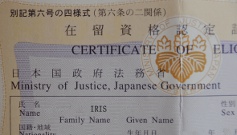
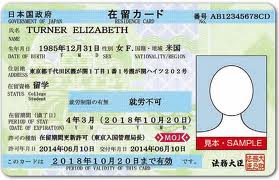
So, Plan B it is. There is something that is called a “cultural visa”, under which you can come to Japan and study Japanese culture. Usually people go for martial arts (Judo, Aikido, Kendo…) or other cultural pastimes like Tea Ceremony, Calligraphy, Ikebana,… I will study soroban – the Japanese abacus I find so interesting. My soroban teacher has agreed to take me on as an official student, and together, we are trying to get one of those cultural visa.

There was some paperwork involved, not so much about my background – after all I am just a student – but about my teacher’s background, as the teacher needs to be an expert in the field. Well, I have just found out that he has taught the main actor of Abacus and Sword how to use the soroban, I hope that is expertise enough for Japanese immigration. We ended up producing a lot of paper for the application, as (several people have now confirmed that) the Japanese love documents and paperwork, and it seems that the larger the amount of documents you produce, the more sincere you are about your undertaking. Once again, form over contents, it seems…

So, I went down to the immigrations bureau this afternoon to hand in my visa application. It was comparatively busy, but I did not have to wait for long in the line to get to the first document screening. Among the big stack of papers there needed to be a return envelope, addressed to myself and provided with a 380 YEN stamp. Okay, I got that, but… the list of application papers did not state which type of envelope was required – so I thought, in typical European manner: Bigger is Better and brought a large envelope. Also, because of the rising taxes, the 380 YEN stamp was unlikely to be correct. At the post office they claimed not to know anything about 380 YEN stamps before April (?), so we went for a 400 YEN stamp in the end. So much for the background, in any case, I stand there at the information counter with my pile of papers, and the immigration officer gives it a cursory glance – until he finds the envelope. From there, the dialogue went like this:

Japanese stamp from 1982.“This is not the right type of envelope. You need a small envelope. And it does not have the right stamp.”
“Okay, so what stamp do I need?” 
* shuffling of paper, looking up prices *
“340 YEN”
“It has 400 YEN on it. So, I buy another 30 YEN stamp and put it on the envelope and we’ll be fine?
“No, you’ll need a small envelope.”
“But…??”
* more paper shuffling, searching for a different form *

“I’m sorry, I made a mistake, you need 392 YEN. On a small envelope.”
“But…?? I have 400 YEN here – just send it in the big envelope, I don’t mind.”
“Please get a small envelope and a 392 YEN stamp and come back again. NEXT!”
* handing back the papers with a look that obviously means “But WE mind!” *

On the 20 minute way back to the post office my emotions went on a roller coaster between laughing, crying, screaming, becoming homicidal… The situation was seriously Kafkaesque, and I begin to wonder whether, in the long-term, I will not have more serious problems with this sort of things. After all, I am with Terry Pratchett, when it comes to rules:
“Rules are there so that you think before you break them”…

PS: In hindsight, the real problem may have been the large envelope, as it seems that the Japanese post bases their prices on weight and size. When I went back to the immigration office, equipped with a proper sized envelope, all went fine. I will have to supply two more pieces of paper, but then the application will be processed. Wish me luck!

Shipwrecks

Shipwrecks
Yoshimura Akira

cover of ShipwrecksFinally, Isaku is 10 and thus considered an adult. He is the oldest son of a poor family in a fishers village where everybody is poor. Income is generated by selling fish – or you sell yourself into servitude, as Isakus father and many other villagers have done. During winter, when the weather is too stormy for fishing, salt is produced over large fires on the beach. This is done chiefly at night, in the hope that an Ofune-sama will arrive, a ship stranded on the sharp rocks, a special gift from the gods to support the villagers. One night, an Ofune-sama does arrive, but instead of the expected rice, the ship only carries dead people, dressed in expensive red garments. Is this Ofune-sama a blessing like the others, or a curse after all?

We follow Isaku through several years, while he tells the story of the village, his poor family and relations. We hear of his pride when charged with maintaining the salt fires at night, his relief when finally learning the intricate ways of catching saury, his plans for marrying the young Tami, and his grief at the death of his baby sister. The most exciting event in his life is the arrival of the Ofune-sama, it brings changes beyond his wildest dreams.

Would the book only describe the struggle of the villagers, it were uninteresting, too often have we read about such things, we only need to turn on the TV for a modern take on the issue. But here, the Ofune-sama add another level, a level of deliberate deceit and cold hearted efficiency, which draws the villagers into a web of guilt they do not notice until the price they are forced to pay becomes too high.

Akira Yoshimura, born in 1927, was a Japanese author who wrote more than 20 novels, some of which won prestigious Japanese literature prizes over the years. As a weakly child, he could start university only when he was 23. He quickly became the head of the literary circle there, where he met the group of Yukio Mishima. He published his first novel in 1958, and his life achievements for Japanese literature were crowned with the Japanese Order of the Rising Sun in 2006, the year of his death.

Check this book out on amazon.

Visitor

Barack Obama has visited Japan for a couple of days, and, nothing much has happened. In truly political fashion, hands were shaken and bows made, places were visited and banquets held, and press conferences were given. In between, allegedly, there was even time for serious business talks, but, as I said, nothing much happened.

The trade treaty between Japan and the US is still at a standstill (I’m rather glad about this as I am not eager to eat American crap); the US has confirmed that they will still come to Japan’s aid should they be attacked by anyone (meaning: China, in case they stop their verbal threats and start doing something more serious about a couple of islands nobody except a handful of politicians really care about); and I’m sure some things were carefully kept under the rug they have been swept and not mentioned at all (Fukushima, Yasukuni…)

So, nothing much happened. Obama has today moved on to Korea and is probably already busy repeating the Japanese experience there. Nothing much happening nowhere where politicians are involved…

Abbr.

My Japanese is moving slowly but steadily forward. I am trying to speak a bit more and keep learning Kanji – it is indeed true, after a while, not all of them look the same anymore.

What keeps tripping me up are the Katakana though. There are no rules as to how to turn a foreign word into Katakana, and unless a word is very common, I guess different people will come up with a different katakanisation of a word, especially when it comes to names. Some words are written according to how they are pronounced, others are written according to how they a written originally, and others still are changed completely. My favourite example of the latter is the French word for cream puff “choux á la creme” which ends up as ” シュークリーム – shoo kureemu” in Japanese… To be fair, writing French with Katakana is all but impossible…

It does not help in the least that Japanese love to abbreviate words, to shorten long Kanji compounds and often, to simply make up new words this way. This is relatively easy when the word can be written with Kanji, for example Kyoto University is written “京都大学 – Kyoto Daigaku” and the abbreviation takes the first and third Kanji to create “Kyodai”. Foreign loanwords on the other hand are a completely different animal… The German word “Arbeit” is directly turned into Katakana “アルバイト”, its meaning changes from “work” to “part time job”, but the Japanese, not content leaving it there, often shorten it further to “バイト – baito”. Similarly shortened are “パソコン – pasocon” for personal computer, “コンビニ – konbini” for convenience store, or “ノンアル – nonaru” for non-alcoholic.

So far, the most interesting combination of Kanji, Katakana, and an undecipherable abbreviation I found on a box of tissues, where the Kanji means nose:

“鼻セレブ – nose serubu”

Nose – self? Nose – sarp? Nose…?? After a long – very long indeed – trial period I finally caved in, admitted defeat and asked for help. It turned out that the Katakana stand for the abbreviation of an English word, and mean celeb(rity), and “Nose – celeb” is an advertisement for especially soft tissues… Well, at least I know now why learning Japanese goes ever so slowly…

Training

Callligraphy of Kanji meaning "Aikido"Last weekend I went to Nara, an old, pre-Kyoto capital of Japan, not far from Kyoto. No, I did not go there for sightseeing, but to train Aikido. Endo shihan, an 8th dan, one of the top Aikido teachers held a seminar in Nara, and one of my friends invited me to go there, so…

This is not my first of Endo’s seminars, but he always knows to give a new spin to his training. This time he started out asking “Why are you here? What do you expect?” just to scold us not to come with fixed ideas, but to empty our minds and to come to the training with an open heart to see what new things we could learn. There were plenty of familiar faces – Aikido is a long-term commitment, so you’ll see the same people over and over again after a while – and some new ones as well.

I did not train at all last year, for various reasons – for one, I had an exceptional teacher in Germany and did not want to spoil my experience there – but it was nice to come back so to speak. I have met somebody who is teaching not too far from Kyoto, so I’ll check out his dojo soon. Today I’m a bit tired and my wrists are still sore (lots of grabbing techniques), but I have no bruises or muscle aches, which is quite surprising after spending the winter rather sedentary on my futon wrapped in blankets…

I survived the two hours training on Saturday quite well, and in the evening there was the traditional party. I have been to several seminars he holds in his own dojo in Saku, and the parties there are always fun – first the food, then entertainment where everybody has to sing or to tell a story. In Nara it was a bit different, it still started out with the food, but then, for the last hour or so, it felt like half of the participants were invited to give talks… No more eating – at least no more getting up for more – limited drinking, limited talking, only listening to rather random people… I could understand a word here and there, but mostly it was quite boring as nobody in my immediate vicinity bothered to translate at least the jokes. At least many of the Japanese looked rather bored as well, so I probably did not miss anything important.

Anyway, the party, held in a hotel, was timebombed and over after three hours (quite long, actually), and I did not go to what is called nijikai – second round, which is usually followed by a third round and tends to end in a karaoke bar… All in all, however, I had a pleasant weekend, the training was great, it was nice to see some friends again, but next time I’ll try to get out of the party when the speeches start.

Aikido

Aikido – literally harmonic spirit path – is a modern Japanese budo or martial art. It was developed by Morihei Ueshiba – now reverently called Osensei – in the early 20th century, starting from the time when he was around 20 years old all through his life until his death in 1969 with 85 years.

Osensei Morihei UeshibaOsensei, born in 1883 was a sickly, weak child, and to strengthen his physique, he was sent to take martial arts lessons. Although his father wanted him to eventually take over the family business, Ueshiba – by then a strong young man – took a number of similarly minded people to Hokkaido, where he established a farming enterprise – today we would probably call it a commune – with mixed success. Around this time, he met two people who proved essential for his future path: He met Takeda Sokaku, a master swordsman and martial artist, and he studied what was then called aiki-jujutsu under Takeda for more than 10 years. After that, he joined the Omoto-kyo sect under its spiritual leader Onisaburo Deguchi and opened his first own dojo in Ayabe. Following his spiritual enlightenment as he called it, he went to Tokyo to open a dojo and there, he fused Deguchi’s spiritual ideas and Takeda’s martial arts into the round and soft movements today known as Aikido.

Callligraphy of Kanji meaning "Aikido"Aikido is generally considered an inner martial art, that is, the focus does not lie on increasing physical strength but on developing inner energy called ki. Nevertheless, Aikido is highly effective if done correctly. Aikido is strictly defensive and uses no weapons. The basic idea is to take an attacker’s force and turn it – using round movements – against him; hence, the force is never blocked but always redirected. The techniques fall into a type of pin, rendering the attacker unable to move, and into a type of throw, where the attacker is moved further. The total number of kata techniques is quite limited (for example, there are only six types of pins), but together with a number of different types of attacks and the distinction of receiving an attack standing or sitting, those basics already take a long time to learn: Depending on the dojo, you can expect to train between three and six years for your shodan, the first grade black belt.

From there, everything else takes a lifetime. Clearly it makes a difference whether your attacker is a 150 kg, 2 m muscular superman who comes at you with all he’s got, or a 60 kg, scrawny nerd… The techniques remain the same, but beyond your shodan you will be expected to use less and less force and to make ever smaller movements. Really good shihan – senior teachers – hardly move at all when they smash you into the ground.

A typical Aikido lesson starts with everybody sitting in rows opposite the kamiza, the head of the dojo that usually contains a scroll or a picture of Osensei. The sensei – teacher – enters and seats himself in front of the kamiza; everybody bows first to the kamiza, and then, with a hearty onegaishimas – please – to the sensei. A technique is demonstrated, usually with one of the senior students and then the participants form pairs and try to execute the technique themselves. Usually, there is no restriction with whom you can train, beginners train with black belts, men with women… Everybody trains to their own abilities, and for the next technique, you’ll find another partner.

One of theOsensei training partners is the uke – attacker – and the other is the nage – defender – who is executing the technique. As uke loses by default, there should be no competition as to who is stronger (although I know this is not always the case) and when after four attacks the roles are reversed, both partners benefit in the same way. At the end of the class, everybody bows again to sensei, then to the kamiza, and finally to the other students. Then, the black belts fold their hakama, and the dojo is swept for the next training.

Although Aikido incorporates many moves from sword fighting, the focus lies on empty-handed techniques, but that depends both on the style that is taught and on the particular dojo. There are a number of different styles or schools of Aikido. For example, Yoshinkan Aikido goes back to Gozo Shioda sensei, one of Osensei’s early students. It is a relatively hard style of Aikido and is taught to the Japanese police. Ki-Aikido, a further development by Koichi Tohei, is the softest style on the other end of the spectrum, focusing on Ki – a concept of energy and inner strength that is difficult to explain, even for Japanese. Iwama style Aikido is the one that emphasises weapons training the most, as it was taught to Morihiro Saito in the dojo in Iwama, where Osensei spent his later years. Shodokan or Tomiki Aikido was founded by Kenji Tomiki, another one of Osensei’s earliest students. Shodokan is the only one where regular competitions are held, and as such it is probably the most distant from Ueshiba’s principle.

Aikido Doshu Moriteru Ueshiba at a demonstration The largest school of Aikido, considered the main line, at the moment headed by Osensei’s grandson Moriteru Ueshiba, is called the Aikikai, and their headquarter is still in the dojo in Tokyo that was founded by Osensei. Especially inside the Aikikai, there are many different styles, which go back to Osensei’s students of different eras. As I mentioned above, Osensei kept refining his Aikido over more than 50 years, and his techniques changed from the hard style of the young man in his prime (many students of this era went to the US to teach) over the more round style of middle age (often found in Europe) to the irresistably soft style of his old age (mainly found in Japan).

Cover image of ït's a lot like dancingAikido dojos of all styles can be found all over the world. If you are curious, just stop by for a trial lesson, most dojos will allow that. Finally, there are also many books about Aikido out there, from biographies of Osensei and some of his better known students down to how-to’s. My favourite book that does not talk about techniques at all, but about the greater picture behind Aikido and its place in the world is called “It’s a lot like dancing” by Terry Dobson, one of the last students of Osensei. Accompanied by stunning photographs, he shares little stories and insights he gathered from his own training over the years. Think about this one:

To have a war, the enemy must be kept alive.

Loophole

I have mentioned two weeks ago or so that a United Nations court has sentenced Japan to stop their whaling, and surprisingly, Japan has agreed to do exactly that.

Well, after a few days it transpired that they were willing to put an end to it only for this season and that they may reevaluate the decision in the future. And now, it turns out that the whaling will be stopped only in the antarctic regions, the Pacific is still wide open and considered happy hunting grounds… Apparently it took the Japanese government two weeks to study the court papers in depth and to find the loophole that says: “Hey, we cannot hunt around Antarctica any more, but when it comes to every other place… ” Welcome to Japan!

The Japanese love bureaucracy and they have following the rules down to an art. In a tea ceremony, for example, every single step, no, every single movement is prescribed and has to be executed just so. Sometimes I feel that no matter what it says, if the rule is written down somewhere or stems from a higher authority, it will be obeyed. I have never seen a Japanese pedestrian cross the road at a red light, not even at 2 am in the morning, when he’s the only one around. The rule says that… and so we follow it. Hence, if the UN sentence says “not around Antarctica”, this is exactly what we do, and nothing else. Interestingly, when there is no written rule, people can be rather flexible. I guess it’s just a way of implementing that old saying: In a bureaucracy it is easier to beg forgiveness than to ask permission…