Terror

Today, I thought I’d whine a bit about the weather – it’s that time of the year again after all! And then I woke up to something else yesterday…

On Monday evening, at around 20:00, there was a terrorist attack in Vienna. Four people were murdered by open fire on the streets of the inner city, 25 were injured, among them one policeman. One attacker, a 20 year old member (?) of ISIS was killed. Whether there are any more is subject of investigations. 

I’m happy to tell that all my friends who live in Vienna are safe and accounted for. But somehow, I don’t feel like writing about the weather today. Or anything else much, really.

You too, my beloved Austria?

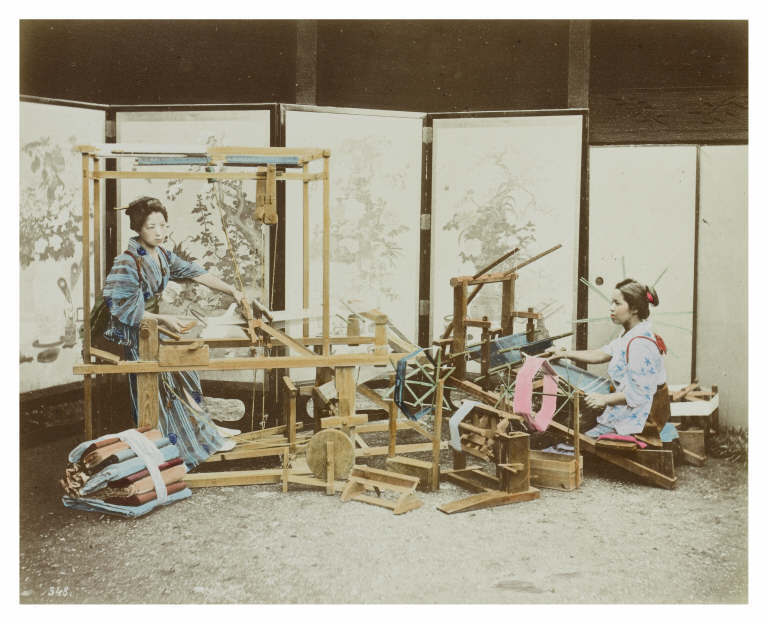
Pictures From Taisho

I’m very interested in Japanese history, in particular in the time of the Meiji and Taisho Emperors.

The Meiji Era (1868 – 1912) was when the Shogunate was abolished and Japan opened up to the Western world and had to speedily catch up with it. It was an era of extreme modernisation, in particular in the cities, while I would assume that most people in the countryside kept living their lives like they had for the last 250 years.

The Taisho Era (1912 – 1925) that followed saw a similar development, but at the same time, the West’s fascination with the newly discovered Japan lessened and whatever was left was drowned out by WWI.

In any case, below is a video of early film recordings taken in Tokyo in the very early years of Taisho, 1913 – 1915. You can see most of the people, in particular children, wearing traditional Japanese clothing and sporting traditional hairdos (I’m a fan of those!) The streets are crowded (as they are today) and I don’t recognise anything except the big lanterns at Asakusa temple in the very end.

The old film has been colored for this video, and there is an underlying soundtrack. The coloring is pretty good, but I’m not happy with the soundtrack – Japanese people are never so noisy! On the other hand, these are mostly children, and maybe things have changed in the last 100+ years. Anyway, enjoy!

Not My Day…

Have you ever had one of those days that go all wrong from the start?

seiko alarm clockWhen I still had a job that forced me out of the house each morning, such days would inevitably start with my trying to brush my teeth with my face cream. Or to moisturise with my toothpaste. (In my defense: Similar sized tubes standing next to each other. Plus: I’m not a morning person.)

Unfortunately, there are no such simple indicators anymore since now I work from home and often sit in front of my computer already before I think of hygiene. Therefore, I had no clue whatsoever that last Thursday would turn into one of these “I should have gone right back to bed” days.

It started mid morning when I wanted another cup of tea and wondered where all those bread crumbs on my kitchen floor had come from. And why some of them where moving. On closer inspection these turned out to be insect eggs/pupae the size and color of sesame, and some of them had already turned into tiny white larvae.

Thankfully, they were all concentrated around the garbage bin, so I cleaned out the lower kitchen cabinets (more eggs), swept up about a handful of insects-to-be and threw the whole mess out. To date, no further wrigglies to be found, but the whole operation cost me half an hour on a day where I had already several appointments.

The first meeting was rather uneventful, except for the fact that I had ordered hot fruit tea (or so I thought) and was served an iced soda. Nice, tasty and very fruity indeed, but not quite what I wanted on that rainy day.

Next meeting: rehab for my hip pain. The clinic has changed their mode of working, so it’s 40 minutes of manual therapy followed by two or three exercises of five minutes each. Already the first excercise – a stretching of the left hip muscle – was too much for my ancient jeans. They promptly tore at a very improper place and exposed about 20 cm of my inner thigh. No more exercise after that!

However, one more meeting to go, so I had to rush home, and get changed into something less revealing. At which point I found out that I was not only out of jeans, but out of any kind of pants that were both fitting me (thanks Corona!) and suitable for the current season. All I had were thin summery pants and thick woolen ones for mid winter. I did find some sort of workaround though (don’t ask…) and off I went for my last meeting of the day.

I made it just in time and ordered a glass of orange juice. When the staff put the glass in front of me, it was cracked halfway through. Thankfully I noticed it before I left the counter, and I got fresh juice in a new glass without charge. Other than that, this meeting was uneventful as well.

Finally, upon return to my part of town, I went to Uniqlo to shop for pants. It was exactly the painful experience I try to avoid – which is how I came to be pantless in the first place. Having more curves than the standard Japanese girl makes shopping extra difficult, even if the sizes as such appear to be the right ones – I still can’t get the pants to fit over my hips. Anyway, in the end I could find two that fit me rather well and I went home, well, not happy as such, but content.

Mostly content with the fact that the day was over and I could finally close the door behind me and hide under my covers.

Kyotographie 2020

I spent a great weekend with a friend of mine at Kyotographie 2020! This is an annual international photo exhibition that usually takes place in spring, but has been postponed by half a year because of Covid19. My friend always comes to visit and together, we try to see as many of the exhibitions as we can.

As usual, the exhibitions were very far apart at various venues, but because this year the scope was much smaller than usual – 12 exhibitions with 3 associated programs – we were able to see all but four of them, and we weren’t even overly stressed. My favourites are below, you can even “walk” through the exhibitions online – check out the links!

It’s hard to pick my favourite this year. I liked Mari Katayama’s photos of her body covered with gold glitter. Atsushi Fukushima’s photos of old people and their homes was very touching and made me wonder if I myself would one day end up like this – single woman that I am. Pierre-Elie de Pibrac from France captured the sheer beauty and opulence of the opera in Paris. And in the old Assembly Hall of the Kyoto Prefectural Building, Omar Victor Diop staged his own assembly with famous figures from African history who have something special in common.

I had a great weekend with my friend, and although it was raining on Saturday and there was a lot of walking involved on both days (for which I paid with leg pain throughout Sunday and Monday), I wouldn’t have wanted to miss this. As a bonus, I was taken home by the Kyotographie shuttle on Sunday afternoon when my friend got on the train back to Kobe – a perfect end to the weekend!

Whether it was the exhibition or meeting with my friend, it did help me get out of my funk a little. I’m feeling rather depressed these days (sorry for not writing, and I still owe you some pictures). I’m not sure what the cause is of all this – that I have practically no work, that I see even fewer people than usual, that I don’t go out much…? Atsushi Fukushima’s old people come to mind again – is this just what I’ll be facing 35 years from now, nothing to do but plenty of depression? Better come up with coping strategies while I still have full brain capacities…

Pleasure Cruise

Sorry for not writing on Sunday – it’s weird how Sunday is creeping up on me and then I have nothing prepared… In this case, I have some sort of excuse though: I was busy working because I took Monday off.

Already back in March, I wanted to take the Lake Biwa Canal Cruise, a litte boat tour from Otsu on Lake Biwa to Kyoto. I had booked everything and then, just two days before my trip, it was cancelled because of Corona… However, they have opened up again on October 1st for their autumn season, and this time I booked extra early to make it happen.

And I have to say: It was worth every minute! When you get to the terminal, you get to see a short film of the canal and its history, and you see the main locks in the beginning of the canal. Then you’re ushered into the little boat that has only 12 seats and except for a glass roof, is otherwise open. And the first tunnel is just a few meters past the boarding point!

What I found interesting were the many insects inside the tunnels where it was slightly warmer than outside, even though it was a bright day. In the first tunnel, we even got fog! In between the tunnels, the canal runs through quiet areas of Otsu and Kyoto, there are forests on one side and a path with big trees on the other. You can see the occasional temple and many birds along the water, and most of the people come and wave when the boats pass by.

I will add a few pictures tomorrow, the trip was really beautiful, especially from my seat in the very front. (Foreigner bonus, I’m sure).

To make the trip worth my while – after all, the cruise takes only 55 minutes, I went to Otsu a bit earlier to visit Miidera Temple, one of the largest temples in all Japan. Even so, it was blissfully empty, but maybe that’s because the precincts are so large that you wouldn’t meet many people anyway.

I will post a few pictures of my trip tomorrow, and I promise to write in depth about Miidera and my fantastic pleasure cruise on some other Sunday.

Improvised

The other day, on the bus, there was an elderly woman sitting across the aisle from me. In general, I do like to watch people, but she only caught my eye when she started nestling with some plastic. She had some strips of thin plastic which she twisted into a somewhat thicker string that she finally knotted into a circle.

She worked very deftly, but I could see no reason why she would do that, and on the bus to boot. From my experience with people watching, I can tell you that there are many very strange people on the loose. In cases as these, it is best not to stare. But she looked like a friendly and normal grandmother, so I kept glancing at her doings ever so often.

After she had finished two plastic circles, out came a small yellow towel. Most Japanese carry them, they are extremely handy in public bathrooms where very often, there are neither towels nor any other means to dry your hands. These days its even worse, when thanks to Covid19, most electric handdryers have been turned off to prevent spreading the virus. But I digress…

So, out came the towel and she folded in two opposite corners to form an (almost) rectangle. She then placed one of her plastic cirles of the third corner of ther towel and folded this in too. Now I was positively staring. What IS she doing, for crying out loud? Occupational therapy? On the bus?

She performed the same operation with the second circle and the fourth towel corner. I still didn’t get it. Only when she was trying to put it on did I realise: She was making a face mask!

They are still mandatory, okay: kindly requested, on public transport , but I hadn’t even noticed that she didn’t wear one until then. Unfortunately, my own stop was coming up, so I didn’t see her wearing her creation. The strings were a bit too short, so she needed to make adjustments. But just coming up with the idea on the fly, and to use what she had on hand – pure genius!

So yes, there are indeed lots of very strange people on the loose. But sometimes, it’s worth looking beneath the surface.

Kabuki Dancer

Kabuki Dancer
Sawako Ariyoshi

When Izumo no Okuni comes to Osaka with some fellow villagers, all she wants to do is dance. Her rustic folk dances and songs quickly gain her a loyal following among the common folk, and she even gets invited to perform for high ranking samurai and court nobles. Her husband Sankuro, ever so interested in fame and fortune, would like her to dance only for wealthy patrons, but Okuni opts to move to Kyoto instead. There, at the banks of the Kamo river near Shijo street, her distinct and innovative style draws large crowds of spectators and, in time, competitors who imitate her. However, Okuni remains ahead of them all, and despite numerous setbacks, she remains “Best in the World” and single-handedly invents what is known today as Kabuki.

This book blends what is surely known about Izumo no Okuni with old tales and legends. The result is a gripping life story of a woman who did not always get her way, but nevertheless insisted on leading her own life amidst the turbulent last years of the Japanese warring period and the beginning of the Tokugawa Shogunate.

I greatly enjoyed this book about Izumo no Okuni that follows her life from the age of 17 until her death at 37. While much of her personality depicted here must be considered fiction, it is hard to conceive how a less strong-willed person would have been able to create an art form that is still practised (and innovated) today, 400 years after her death. Fans of Kyoto will recognise some of the places mentioned in this book.

Sawako Ariyoshi, born 1931 in Wakayama, developed an interest in the theater already as a student and her own plays are widely performed in Japan. She was a prolific writer of short stories and novels and became one of the country’s most famous female novelists who won the prestigious Akutagawa prize and a number of other Japanese literary awards. Her books deal with social issues like the depopulation of rural areas or the plight of the elderly that are as current now when they were written. She died in 1984.

If you’re ready for a fun historical novel that is set in Japan and does not feature any swordfighting – not real one, at least – get this book from amazon.

Domestic

We’ve just had a nice long weekend with Monday and Tuesday two holidays in a row. Since the weather was great, I took some time to cycle around and visit a few new places or just explore the back roads. I also did a lot of reading (a friend of mine just sent me her new book) and I caught up with some things household related. So, mostly, I stayed at home.

It seems that most people in the neighborhood did the same. And unfortunately, with all the windows open at this time of the year, you hear more from your neighbors than you might want to…

In the opposite building, there is a family where I sometimes see the husband hanging up the laundry on the balcony. Personally, I think it’s great when a man does his bit in the household, but I digress. Sadly, in the last time, I can hear them fight more often. I mean, I can hear him scream on the top of his lungs, he seems to be very angry. It’s way too fast for me to understand, but it does scare me, and I’m happy he is out of throwing distance from me…

Which leads to a certain dilemma: Do I say anything? And if so, to whom?

To him? Even though we are “neighbors”, I have never met him. And starting your very first conversation with a “oh, you’re the one screaming last Sunday morning…” is not the best idea.

To somebody else in the house? First of all, I am sure the others have heard something as well. But, I once said something when a burglar alarm went off in the middle of the day, and I was assured that it was nothing…

To the police? Well, it’s not as if I could tell them what is being said, the only thing I ever understood was “shigoto desu – it’s work”. Hmmm… now that I write this down, maybe his wife suspects that he has an affair?

So yes, even if you want to do the right thing, it is not always so clear what that would be, really…

Nonomiya Jinja

Deep in the bamboo forest of Arashiyama lies Nonomiya Jinja, one of the oldest shrines in Kyoto, dating back to the 7th century. Nowadays, it is a rather small shrine overflowing with tourists, but when it was established, it was literally a “shrine in the fields” (hence the name) dedicated to Amaterasu, the Sun Goddess. Those imperial princesses who were meant to become priestesses at Ise, the main shrine of Amaterasu, first came here for a purification rite that took a year or more. Afterwards, they were sent off in a colorful procession, never to return to their family.

The first such saigu to be sent to Ise from Nonomiya Shrine was a daughter of the Saga Emperor in the 8th century. However, the practice ended in the 14th century. Afterwards, the shrine continued to be used for a variety of imperial rituals, and although its importance has declined over the years, and probably its size as well, it is still maintained and visited by members of the Imperial Family until today.

Nonomiya Jinja lies in the evergreen bamboo forest of Arashiyama – the traditional meaning of bamboo is to ward off evil. The entrance to the shrine precincts is at the black kuroki torii which is made from oak with its bark left intact. This kind of “natural” torii is the oldest style of torii that has been used, but because they are nowadays seen very rarely since they are expensive to set up and properly care for.

The haiden prayer hall, where Amaterasu is to be worshipped, lies only a few steps behind the torii. This is the main square of Nonomiya shrine and there are many ways to pray to the gods. For one, there is the large kame-ishi stone that looks like a turtle. It is said, that if you ask the gods for something and afterwards, with that wish still in mind, give the kame-ishi a good rub, the wish will come true within a year.

Here is also a spot to put up ema or to write your wishes onto prayer sticks, both of which will be ritually burned at special intervals. And if you buy one of the special mizu omikuji, there is a little well where you can float your water charms and see what is in store for you.

To the right of the haiden, there is a red torii that leads further into the shrine’s precincts. Here are the shrines for the minor gods that are worshipped here, like Shirafuku Inari and Nonomiya Daikokuten who are responsible for good marriages and childbirth, and Shiramine Bezaiten and Ooyama Bezaiten watch over the arts and traffic safety, respectively.

There is also an interesting mikoshi portable shrine that looks quite different to the others that are usually used during festivals. I am not sure why this is, but it makes a nice motif for photos.

Another popular motif is the moss garden of Nonomiya Shrine. Although quite small compared to many other shrine gardens, the lush green color of the moss carpet amidst the red cedar trees is admired by many visitors throughout the year.

Because Nonomiya Shrine lies within the rather dark bamboo forest and it carries the idea of parting from Kyoto, it has a rather sombre atmosphere which has inspired many painters and writers. For example, Nonomiya Shrine plays an important part in a chapter of the Tale of Genji, where prince Genji visits his lover – the mother of a saigu – at the shrine. This story, in turn, is referenced in a famous noh play by Zeami, called after the shrine Nonomiya (Shrine in the Fields). Of course, many poems have been written about the shrine and its suroundings, and it even plays a role in the book The Old Capital by Japanese Nobelprize winner Kawabata Yasunari.

Nonomiya Shrine is popular amongst women who look for relationships and marriage, or who come to pray for easy childbirth. There are beautiful enmusubi (tie-the-knot) omamori available, which show motifs of the long gone Heian era. Sadly, the goshuin stamp of the shrine is not very pretty, since it is only a red stamp without the usual calligraphy written in black.

Kyoto's Bamboo Forest, completely empty.I would not necessarily recommend Nonomiya Shrine on its own since it is rather small and there are too many people to enjoy the experience (if there’s no pandemic going on…) However, if you’re strolling around the bamboo forest anyway, it’s a nice place to step in. The big event at Nonomiya Shrine is the Saigu Gyoretsu Procession in October, where the ancient procession of the princess to Ise is reenacted, even though she only goes as far as the river these days.

Chrysanthemum Festival

September 9 is one of the special days in the Japanese calendar. It is the day of the Chrysanthemum Festival, also called choyo or kikku-no-sekka, and many shrines and temples have ceremonies to pray for health and, in particular, longevity. This is because 9. 9. is the largest single-digit day possible, and so there is a connection. Looking at the Japanese statistics of people who lived beyond 99 years of age, the prayers actually seem to work.

In Kyoto, the most famous Chrysanthemum Festival is at Kamigamo Shrine, where there is karasu sumo, a special event with kids performing sumo for the gods. I visited this event already in 2013, you can read about my impressions in the post I did then.

So, today I had to go elsewhere, partly also because the karasu sumo was cancelled because of Covid19. Many other shrines have cancelled their events too, so I decided to visit Kuramazaki Jinja who promised a special dance for the occasion. I have passed the shrine before, on my visits to Arashiyama, and it looked interesting, so off I went just before noon.

At Kuramazaki Jinja, the kikku-no-sekka ceremony started with the usual prayers to the gods, accompanied by gagaku music. Then, different types and colors of chrysanthemums were offered to the gods in a comparatively short but nevertheless solemn ceremony. Afterwards, there was indeed a dance performance by a female dancer who also held chrysanthemums in her hands during the dance. For some reason, the music for her performance came from a tape, I did not quite understand why, since there were gagaku players present. Finally, guests to the ceremony were allowed to make their offerings to the gods as well.

Altogether, the ceremony took about 30 minutes. I felt that it had been scaled down from its usual size. For one, there was no chrysanthemum sake offered to the visitors because of Covid19. Also, I believe there should have been more performances of music and dance after the religious ceremony, but whether they were cancelled because of Corona or because of the rain, I am not sure.

One thing that struck me immediately: There was a woman among the priests of the shrine. I have never seen this before. Usually, all the priests are male, and the only women allowed near the gods are the miko, the shrine maidens, who to this day have to be unmarried women. And here, there was a young female priest, and she even seemed to lead the ceremony. Slowly, slowly, even Japan is changing. Maybe.