Missed…

Today, I’m very tired again, I’ll go to bed soon! After my usual three appointments today, I had a fourth one: A Japanese friend’s Polish friend has an exhibition starting tomorrow, which means that the opening party was tonight. My Japanese friend wanted to introduce me to her Polish friend, so I got invited (the event seemed very low-key and laid back). Even though I didn’t really want to go, because I’m usually exhausted on Tuesday nights, I did visit the gallery anyway, business networking and so.

seiko alarm clockUnfortunately, I must have been too late, because my friend wasn’t there (anymore). And because I can’t really walk up to people and say “Hey are you the Polish friend of…”, I didn’t stay long after I took a look at the exhibits. I’m not a big fan of modern art but some of the pieces were quite interesting! Maybe I should give modern art a try after all?

Japanese Calligraphy

Although most Japanese nowadays write with ballpoint pens or, worse, type their thoughts into their smartphones with a single finger, traditional brush calligraphy is still held in high esteem. All kids in Japan learn calligraphy in elementary school where it is seen not only as a way to study proper hiragana/katakana and kanji themselves, on top of producing nice handwriting, but also as a means to teach patience and diligence and to build character. Many people in Japan believe that a fine piece of calligraphy always reveals the character of the writer.

The Gakkiron written by Empress Komyo (744).Like many other traditions in Japan, calligraphy or shodo – the way of writing – came to the country from China, where the first pictograms were invented around 2800 BCE. The Chinese script was introduced to Japan around 600 CE together with Buddhism, and the first application of calligraphy was the copying of Buddhist sutras in temples. Some 200 years later, in the Heian period, writing had been introduced to the court and its bureaucrats, and a distinctive Japanese style of calligraphy began to develop, culminating in the hiragana script.

hiragana calligraphyThe hiragana script was invented as a kind of shorthand for the kanji, but over time, many of the hiragana were dropped and the script turned into a syllabary. For a long time, hiragana were considered the women’s script – in fact, women were even expressly forbidden to study kanji – but eventually, hiragana became widely accepted, and their combination with kanji created the typical Japanese writing system known today.

calligraphy toolsShodo is a relatively cheap hobby to start. As a beginner, you need a brush, paper, paperweight, and ink. Many beginners start out with bottles of liquid ink, but the more serious students will not get around buying ink stick and stone to grind their own ink. Practice paper can be cheap newsprint, but more elaborate works that are meant for keeping do call for Japanese washi paper, and at that stage, a personal seal to sign – or rather: stamp – the piece will be necessary. Many calligraphers carve their own seals in special seal script characters, by the way.

8 strokes of eternity
8 strokes of “eternity” taken from www.japanvisitor.com

When learning to write kanji with a brush, the kanji for “eternity” is probably the best starting point, since its eight tenkaku strokes are all the different strokes that there are to master. Technically, that is. Students first start out with what is called kaisho or regular script, which has clear aesthetic rules – for example, each character should be as square-shaped as possible. Some of these rules go back to Wang Xizhi, a 4th century Chinese scholar whose calligraphy was seen as an aesthetic benchmark in both China and Japan for a long time. Kaisho most resembles the kanji printed in newspapers and books.

Calligraphy by Muso Soseki "no meaning"The next step for the learner is gyosho or semi-cursive script, which resembles handwriting and works with a number of simplifications and abbreviations, so to speak. The last step is sosho or cursive, where the easy flow of the brush is paramount. It is very individual, and closer to art than to legible writing. Many people cannot read texts written in sosho they are not familiar with.

Not only the way each stroke is written is important, also the order in which this is done. Some people insist that only kanji that were written in the correct stroke order possess aesthetic merit and are pleasing to the eye.

Since shodo is a rather cheap hobby, many people in Japan practise it. It is a form of applied art deeply connected with Japanese spirit and culture. As already elementary school children learn the basics, they can take part in the popular kakizome ceremony, where people of all ages write down their wishes for the New Year. This often takes place in temples or shrines, for example in Kyoto, Kitano Tenmangu is very popular for kakizome. The best pieces of calligraphy are exhibited afterwards and may even win a prize. Also connected to the New Year are the nengajo postcards. Although nowadays, many of them are simply printed out, especially older people still write and address them by hand, thus showing off their penmanship.

Calligraphy by Bankei Yotaku.Zen calligraphy is a special form of calligraphy practised by Buddhist monks in particular. Since black ink on white paper is rather unforgiving and shows every mistake and even hesitation, the idea is that there is but one chance to get it right on a  particular piece of paper. In order to produce good Zen calligraphy, the writer must completely clear his mind and let his body and subconscious do the work. This spiritual state of mind is called mushi, and hitsuzendo means “zen way of the brush”.

Flower by Nakajima Hiroyuki.

Finally, calligraphy also stands at the beginning of each tea ceremony: The guests are invited to look at a piece of calligraphy before the ceremony begins (also as a way to clear their minds) and often, there is also a calligraphy placed in the tokonoma alcove of the tea room.

Modern Japanese calligraphy was developed in the 1930s, when many new schools of calligraphy emerged that advocated creating a new, distinct style of Japanese calligraphy, rather than adhering to old, pre-Edo aesthetics. There are stunning modern pieces that are more reminiscent of paintings than of writing, and are definitely worth checking out.

If you want to know more, especially about calligraphy history, see this page on Japanese calligraphy.

Celebrations

It’s Golden Week plus the weekend afterwards – Japan takes a time out until next Monday. I’m quite happy to catch up with a few things in the coming days, maybe visit a new shrine or temple for a new event, or finally go see the Kyotographie Photo Exhibition… On top of the holidays for everyone, I have my own anniversary:

chocolate cakesThis Saturday, May 5th, I will celebrate 5 years in Japan!

Wow! I don’t think I should say “I made it”, since business is still a bit wobbly and not where it could or should be, but I can definitely state “It was worth it”!

I have come to this country without help from anyone, I have opened my own business, I have made new friends… Overall, in the last 5 years I have grown in ways I would not have thought possible, and the best thing: I feel so much more secure and confident in my skin than ever before! Even if this doesn’t work out in the long run, I am sure I can just do it again and start over elsewhere. And even though I have my setbacks, like last month, I don’t regret my decision one bit.

Life’s good!

New Project!

Finally, it’s May! Atrocious April is over, and from that low point, the only way is up, surely. And, as a sign that things are really going to change, I have started a new project! Well, actually, it’s not a really new project, I have started it several years ago already, but now it’s time to finally wrap it up and get it out there. Here’s the story:

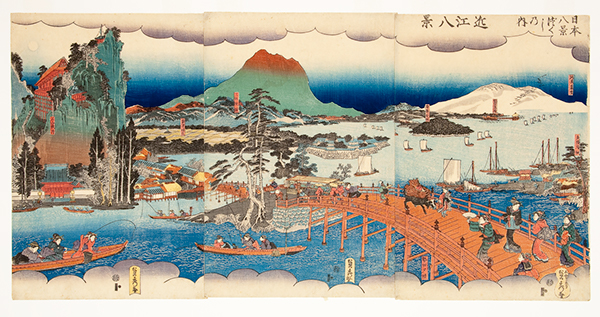
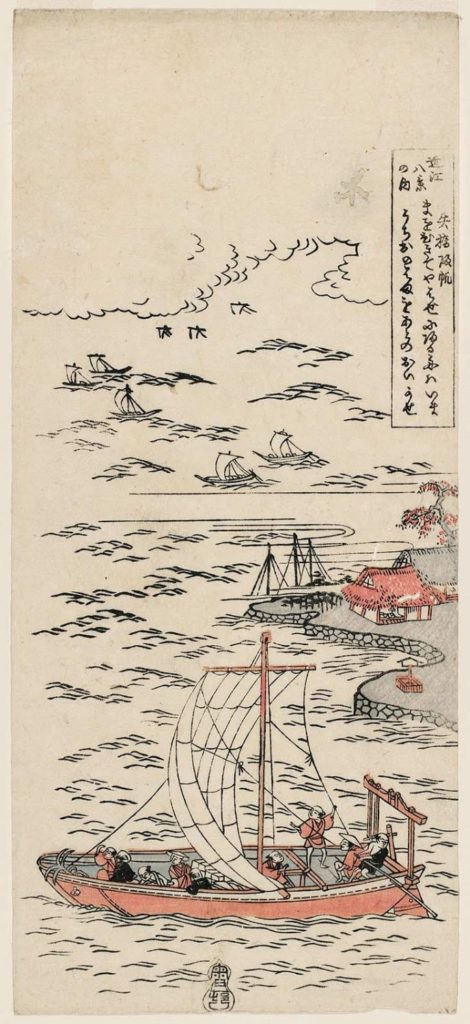
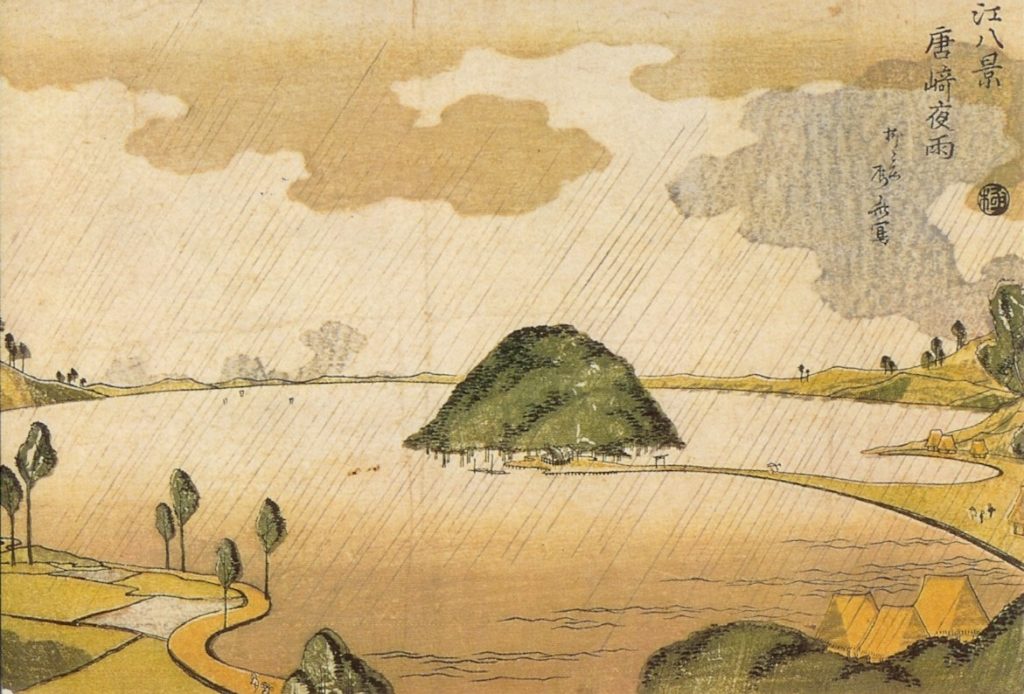
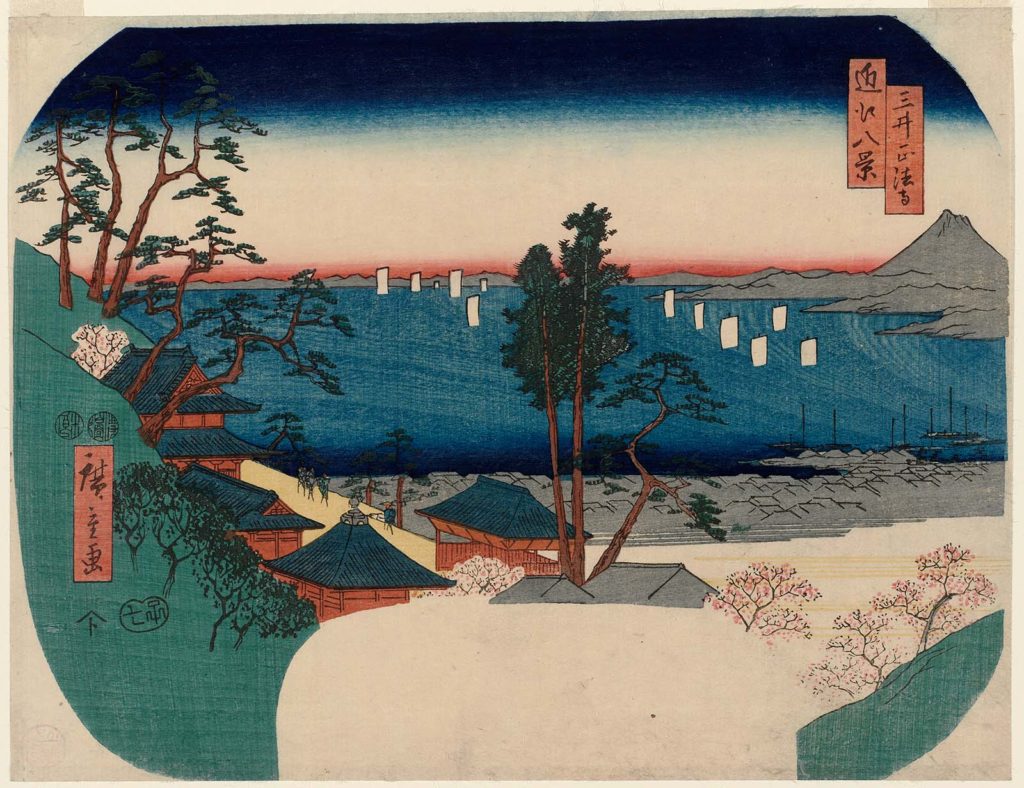
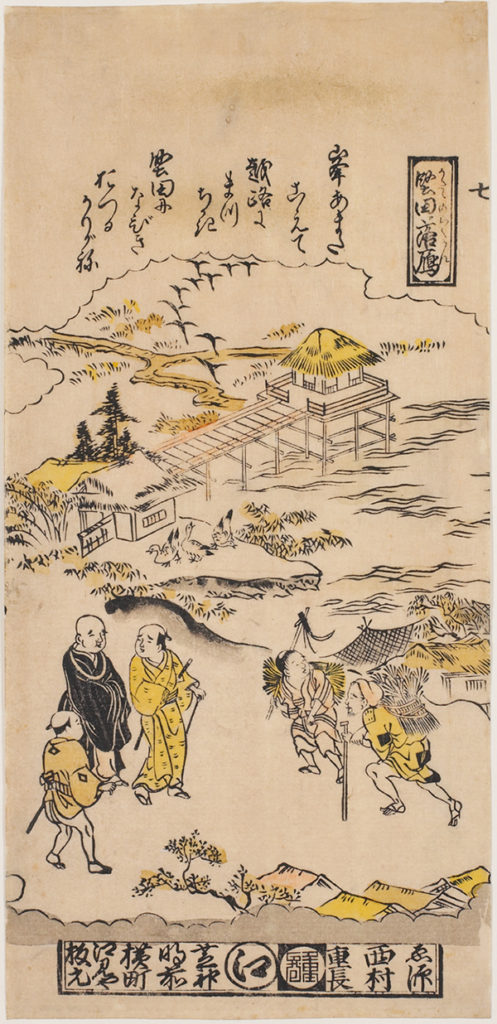
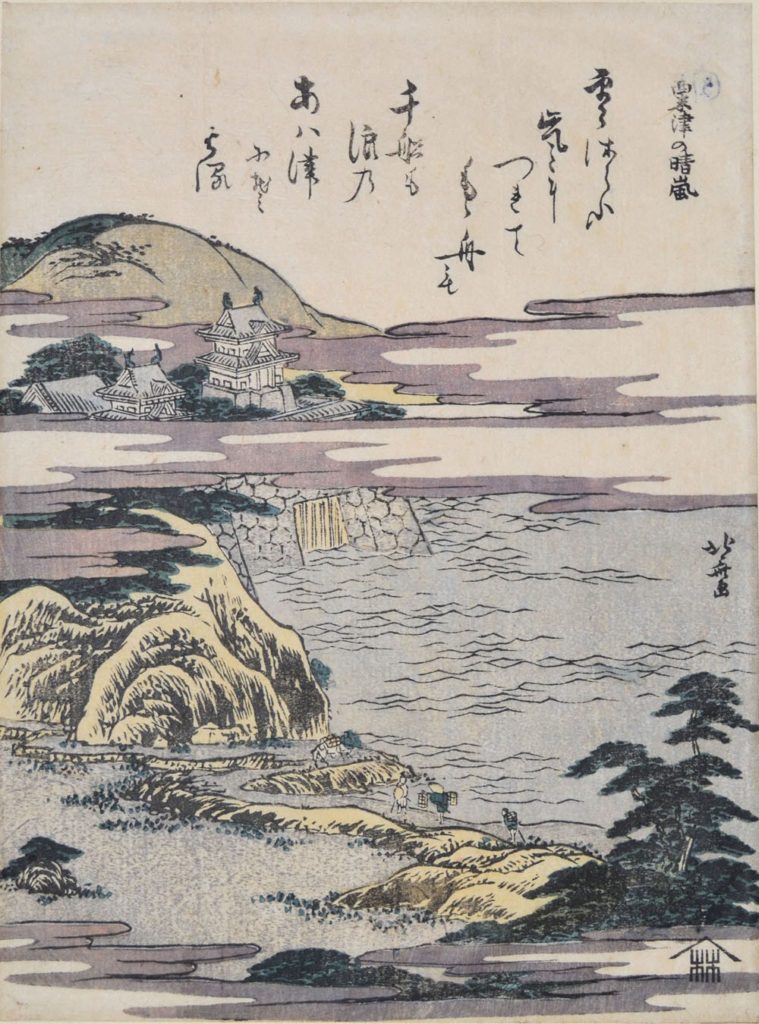
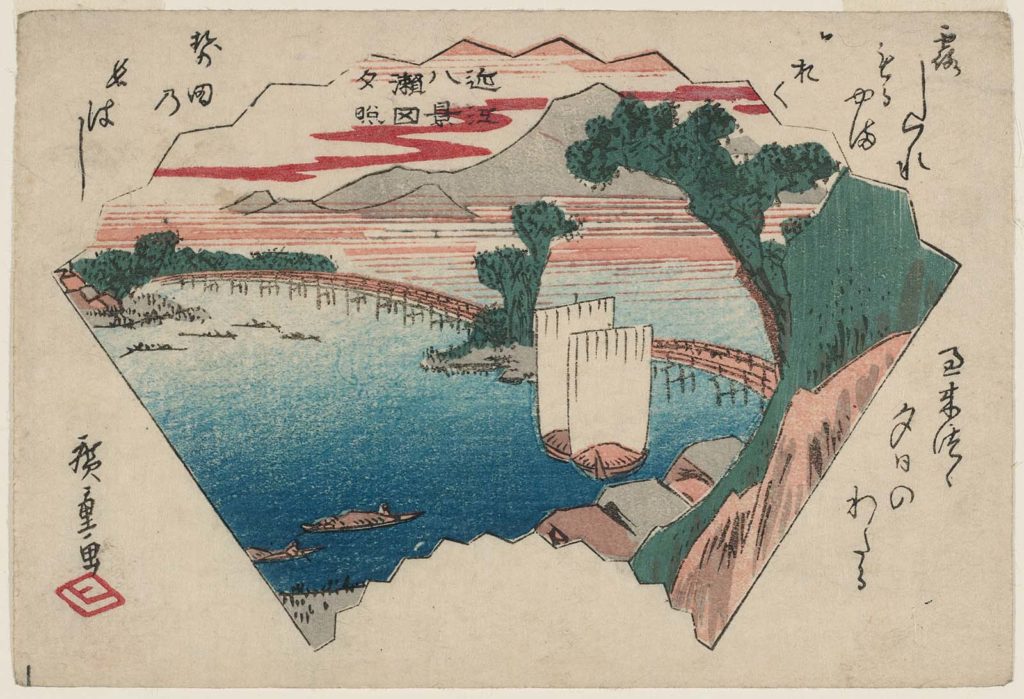
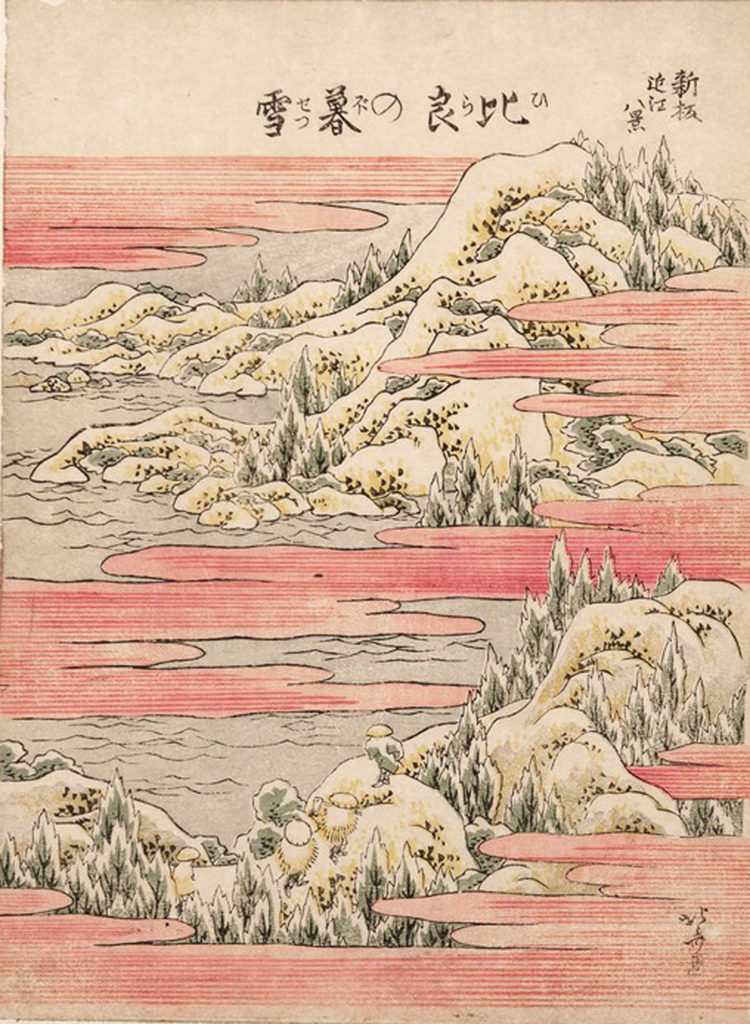
A few years ago, I came across the book “Die 8 Gesichter am Biwasee”, written by German author/painter Max Dauthendey in 1911. The title is reminiscent of the “8 Views of Omi”, a series of woodblock prints depicting scenes from around Lake Biwa (Omi was the old name of the province where Lake Biwa lies). Dauthendey had visited Japan on his first voyage around the world in 1906, and he immediately felt drawn to Japan. He must have come across Lake Biwa (which is about 30 minutes east of Kyoto) or the woodblock prints, or both, and he was so inspired that he penned eight stories named after the woodblock prints.

Hiroshige - 8 Views of OmiThose eight love stories are set around Lake Biwa and perfectly convey the feeling of old Japan. Some of the stories are based on true events, but all of them are rather slow-paced (Dauthendey obviously liked to meander about), but once you settle into their mood, they are very beautiful. Interestingly, they have a very Japanese feel in my opinion: their pacing, choice of topic, and the way of leaving the reader guessing just at the right moments is something I have only encountered in Japanese novels. Since at that time, hardly any Japanese books had been translated into Western languages, this must be a reflection of Dauthendey’s own style (he wrote mainly poetry) rather than an emulation of the Japanese one.

Anyway, back to the project: Since those stories touched me so deeply, I have decided to translate them into English, and to publish the result.

In case you are wondering: Yes, that’s perfectly legal; the book is public domain pretty much worldwide – definitely in Japan and Europe – so that’s not an obstacle. The problem is rather my own inertia; I have started the translation a very long time ago, but never finished it. But now I have decided to do exactly that: Finish the translation, approach publishers who might be interested, and, if there is no interest, self-publish. As a deadline for finding a publisher, I have picked the end of this year; to get things published on my own will probably take another 6 months (I have no idea, I might be too optimistic here).

Being self-employed for the last few years has taught me one valuable thing: I am better at keeping promises that I made to other people than those to myself. Hence, to keep things on track and to really finish this project when I intend to, I have set up a Patreon page where people can sponsor my progress. It’s not so much about the money (although it will help replacing the losses from last month), but more about having a way to stay on focus. As a bonus, I will not spam you people here with progress reports all the time, you probably are already pretty tired hearing about my What’s Up In Kyoto page over and over again (yeah, I am bad at marketing).

So, if you like to keep updated on this new project of mine, head over to my new Patreon page, and maybe, you’d even like to become a patron. Thanks!

Death by Water

Death by Water
Kenzaburo Oe

cover of death by waterKogito Choko, renowned Japanese writer with dozens of literary awards to his name (including the Nobel Prize) is suffering from writer’s block. Suddenly his sister calls, offering him access to an old red trunk that is known to hold documents and letters of their father, who drowned when Kogito was a small boy. Excited to finally be able to finish the “Drowning Novel” about his father that he had begun decades earlier (to the dismay of his mother), Kogito decides to visit their old family home in Shikoku and to write what he believes will be his final novel – and his masterpiece.

This is only the second book I read by Oe, famed Japanese Nobel prize winner, and I am not sure what to make of it. The disappointment starts when the red trunk turns out to be devoid of anything useful – his mother had destroyed every important letter before her own death. Then, there are seemingly endless stretches of conversations with or about the members of a theatre group that was planning to stage all of Choko’s novels, culminating in the last one, an endeavour which, obviously, isn’t going anywhere either. Only at the end, with the reappearance of an old family friend, does the novel gain some traction, but there was a lot of paper until then…

There is an interesting line in the book where the author’s mother accuses him of not having any fantasy, only imagination, which is supposedly always based in reality. And the book does feel very autobiographical, but many other things are unrealistic: Would you leave your house to a woman whom you barely know, instead of to any of your own children? Anyway, while I didn’t particularly like this book, I am still curious about the author, and I will see if I can read more of his novels.

Kenzaburo Oe was born in 1935 in Shikoku, and started to study French literature when he was 19. His first stories were published in 1957, heavily influenced by contemporary French and American literature. Oe has been political from his early beginnings as a writer, for example, he has written about Hiroshima’s a-bomb victims, the atrocities of the Japanese military on Okinawa; currently he is very active in the anti-nuclear movement in Japan. His first literary prize was the Akutagawa prize in 1958, and in 1994 he received the Nobel Prize for literature.

Summer Pets

While I am still endeavouring to japanify myself, so to speak, there are plenty of Japanese customs I will never make my own. One of the weirder things, which is extremely popular with kids, is to get pets. Yeah, you may think that’s not really weird, I mean, all the kids like pets, but have a look at what I mean and think again:

Japanese pet beetlesSo, these enormous beetles – a number of different species – are very popular with kids to keep as pets over summer, in fact, you can start buying them now. The children are responsible for feeding them and cleaning their boxes, which is relatively easy I think, and since the beetles will die in autumn, it’s a short-term activity as well.

I am not sure what to think of pets like that. These large beetles – I have seen some up to 10 cm long – are indeed interesting, but at the same time there’s no way I would let one inside my home voluntarily, cage or no cage. I have enough of the bugs that visit me without my permission, thank you so much.

Shocked!

The Kyotogram situation is worse than I thought. Today, we were to meet the boss to sign the termination of our contract by the end of May. It turned out that not only the Kyotogram project will be shut down, but that the whole Kyoto office will close!

All of the projects initiated in Kyoto will be terminated, and the department will move back to Osaka headquarters by mid June. Everybody heard only this morning, so people in the office were in shock. At least nobody of them will lose their job, and it seems that they will remain one department and keep working together, on whatever new projects.

Japanese currencyWhile this hurts, from a business perspective it does make sense. Apparently the Kyoto branch office was opened two years ago, and after this time you should start seeing some sort of (minimal) profit. According to the head of Kyoto office “the numbers were good, but the profit was not”. Nowadays it seems that companies are (or must be?) much less patient when waiting for a profit, so I am not surprised that they do that. I did not know that the whole branch – which had initiated a number of new projects – had not made enough profit to keep itself going, but I am relieved to see that the failure with the Kyozutsumi was not the main reason for the shutdown.

Anyway, back to square one: I need to find something to make up the loss of that income, the faster, the better…

Matsunoo Taisha

Matsunoo Taisha – lovingly called Matsuo-san by the locals – marks the western end of Shijo dori with its large torii. Matsunoo Taisha was established in 701 by Hata-no-Imikitori, the head of the local ruling clan. The story goes that he saw a turtle (a sign of luck and longevity) in a waterfall and decided to build a shrine here. However, the locals had worshipped a certain boulder on the mountain for a long time before that already. In any case, Matsunoo Taisha is one of the oldest shrines in Kyoto, and the Hata clan was instrumental in moving the capital to Kyoto eventually.

Matsunoo Taisha - Torii and Romon GateThe two main gods enshrined at Matsunoo Taisha are O-yamagui-no-kami, the god of brewing sake and of Matsuo-san, the mountain behind the shrine; and Ichiki-shima-hime-no-mikoto, a female deity protecting travellers.

The main entrance of Matsunoo Taisha is at the large, 14m high torii at the western end of Shijo street. A smaller road leads to the main shrine, where there is another torii. From there, the path leads up some steps to the two-storey Romon gate, which is – like the one at Yasaka shrine across the city – guarded by two zuishin warrior statues to the left and right.

Romon Gate of Matsunoo Taisha in KyotoPassing through the gate, at first, there is a small stone bridge to cross, and a few more steps lead directly up to the dance stage. At the left of it is a large display of sake barrels. While these are common donations to shrines, Matsunoo Taisha, as home of the god of sake brewing, has received a large number of barrels originating from sake brewers from all over Japan.

Behind the dance stage lies the long haiden outer hall where people worship and behind that, the impressive honden main hall. This is the oldest building of the shrine, dating back to 1397 and is designated Important Cultural Asset. Its unusual roof – in the so-called Matsuo-zukuri style – forms porticos on the back as well as in the front of the building.

Haiden Prayer Hall at Matsunoo TaishaAfter praying at the haiden, go to the right and through the low entrance to the back of the shrine where a path leads uphill. To the right, there is the famous Kame-no-i well, where a large black turtle spews holy water. It is said, that this water will bring health and longevity to those who drink it. Even more importantly: If sake is brewed with even a small fraction of this water, it will not go bad. Therefore, many sake brewers visit the shrine regularly to get some of the water, and to pray for business success. Further up the path lies the shrine’s sacred waterfall Reiki-no-taki, which marks the spot where Hata no Imikitori allegedly watched the turtle swim all these years ago.

Kame-no-i sacred turtle wellNearby the Kame-no-i well lies the entrance to two of the three gardens that make up the Shofu-en garden of Matsunoo Taisha. They were designed by the late Mirei Shigemori just before his death in 1975 and are considered the best modern gardens in Japan. Each of the three parts of the garden is representative of a Japanese era, and the opposing ideas of stillness and movement, represented by large blue-green rocks and water, respectively, are the central design elements.

The first garden behind the entrance is the Kyokusui garden, with a stream of water bending seven times around heavy rocks. The stream is framed by smaller stones, giving it the appearance of a dragon, a water creature in Japanese mythology. The Kyokusui represents the gardens popular at the Heian era, the time of the foundation of Kyoto.

Kyokusui Garden of Matsunoo TaishaBeyond the Kyokusui lies the Iwakura or Joko garden, where a number of large rocks scattered on a steep slope represent the ancient times, where the gods roamed the mountain tops of Japan. The two largest rocks on top of the slope are meant to represent the main gods of the shrine. Beyond this garden, there is a path further up the mountain where the original place of worship, the iwakura stone, can be visited.

The third garden, the Horai (the entrance is next to the little restaurant outside the Romon gate), is constructed in the Kaiyu style, where a large pond shaped like a crane is the central focal point. The basic idea here is the Chinese concept of paradise, where people do not get old or die. The rocks represent islands in the sea, and the only movements are contributed by the fountain of youth in the back of the garden and the many carp in the pond.

Horai Garden of Matsunoo TaishaBesides the extensive shrine gardens, which are a rare feature in Shinto shrines, Matsunoo Taisha also has two museums. The treasure hall is the main museum; it is situated between the first two gardens and shows 21 wooden statues in total. The three largest ones date back to the Heian period and are among the oldest and best preserved wood carvings of Japan. Although they are carved in the style of Buddhist statues, two of them are said to show the main Shinto deities of the shrine. These statues with their beautiful serene expressions are among Japan’s national treasures and alone justify a visit to the shrine.

The other museum lies near the entrance, on the way to the parking lot. The little Sake-no-shiryokan shows old tools that were once used to produce sake. They were donated by sake makers worshipping the god of sake brewing here.

Kerria bushes at Matsunoo TaishaMatsunoo Taisha lies a bit off the beaten tracks of Kyoto’s Arashiyama area, but especially during April and May, when the shrine’s 3000 yellow Kerria bushes are in bloom, it has a distinct charm that should not be missed. The shrine sells a number of unique lucky charms, for example one representing a bright yellow Kerria flower. However, for extra luck, you should try to win your omamori at the game shooting arrows at empty sake barrels.

Overzealous

Finally, it is getting summer! The weather has picked up, and if the forecast is correct, there will be up to 29 degrees on Sunday! I’m so thrilled – time to get out my T-shirts.

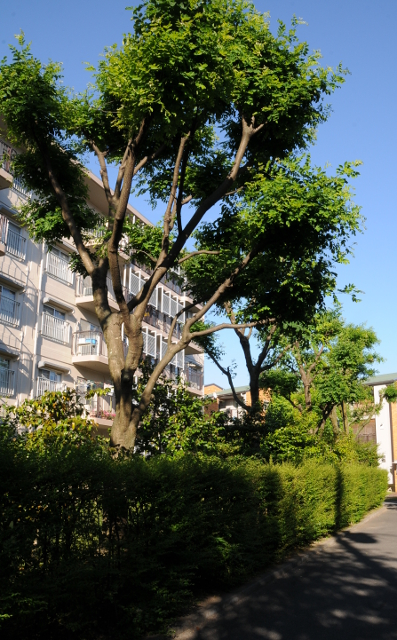
Because it is almost summer, the trees around my apartment are now showing their fresh leaves. In Japan, it is customary to cut back trees and shrubbery during winter, and interestingly, this is often done rather brutally – for my European eyes at least – and I always wonder how the plants manage to bounce back during the next growth season.

However, it is not looking good this year for some of the trees in my apartment complex. Apparently, somebody from the gardening company got carried away and produced this – I took the photo yesterday:

seriously cut treesThose are very sad-looking trees, don’t you think? I doubt they will survive this onslaught – I mean, how could they without any leaves or smaller branches left? They were cut several months ago, but for some reason, this is the only row of trees that was treated thus, the other three rows were not even touched. I wonder whether somebody made a serious mistake and was told to leave (and not come back), or whether this was done to try out something or other. In any case, those trees will not give much shadow for at least this year.

Bad Day

Ever since I started my own company which essentially provides me with an excuse to do what I like, I have greatly enjoyed my working life. Of course, there are always things I don’t like doing as much as others, but in general, I am quite content with the way things are going. So, I think this is the first day in a very long time where I can say with utter conviction:

Today was not my day!

It started out in the morning when I had received an invitation to provide a voice sample for a deeply religious text. Not just spiritual, but religious in the sense of “look deep down into yourself to find out god’s plans for you”. I’m an atheist, always been. Besides, how deep down am I supposed to look – wouldn’t that require a microscope and a very sharp knife? I’m not sure if I should price myself out of this one. As you’ll see in a moment, I do need the money, and it would be quite a large project…

Things went downhill further when halfway to the bus stop I found out that I had forgotten my umbrella. The whole idea of taking the bus in the first place was because by the time I was to go home, it was supposed to rain; and I didn’t want to get soaking wet on the bike. Not taking the umbrella would have been counterproductive, so I had to return to fetch it… In the end, I was late for my Japanese class, but because I’m usually on time, my teacher takes the few days when I’m not in his stride.

The big blow came in my afternoon Kyotogram meeting. I had barely entered the office and sat down on the table when the big boss jumped up from his own desk to come over and talk to my colleague and me. He brought bad news: After the complete disaster with the kyozutsumi project (only 2 – in words: two – sets sold), the headquarters in Osaka (who were greatly responsible for the failure) decided to shut down Kyotogram completely. Right now, it is unclear when this will happen and what we’ll do until then, but the boss said that the earliest we can close up shop will be by the end of May. Which means that I will have to find a new, steady job, which is not easy, most freelancing jobs are one-time only or at least far and in between.

And to top things off, my Tuesday evening German student informed me today that he would like to suspend his German classes for the time being, meaning: for the next 6 months or so. He needs to take an English test in September or October this year, and since he is very busy with little free time, and he absolutely must pass that test, he would like to focus on his English until then. At least he has decided to employ me as his English teacher, which is nice (I’ve never taught anyone the TOEIC before), but at the same time it will decrease my income since I charge less for English than for German classes (because there are so much more people teaching English in Kyoto). He did offer to pay my German rates, but I didn’t think that was fair to him.

And finally, when I went home, it was raining just as predicted.

chocolate cakesSo, that was my day. Or rather: it wasn’t. The only part that was enjoyable was my Japanese class. The grammar basics of how to turn verbs and adjectives into nouns are relatively simple, so for once I didn’t make a complete fool out of myself. I think my Japanese teacher appreciated it.

And I will now turn my back on this day and appreciate a piece of chocolate. Thank goodness today’s over…