
Moving…

Sorry for yet another silence… I hope you didn’t get too worried!

Just in case you’re wondering: No, I didn’t move anywhere (and have no plans to, sadly), but the goinggaijin website moved to a new hosting provider. That was part of the reason for my absence, things turned out to be a bit more complicated than I thought… Anyway, now everything should be back and running properly, now even with a secure site, yay!

Other than this, last week I was very busy with work (even a bit more than usual these days), but it seems that for now, I have satisfied all my external clients and can focus on my own work for What’s up in Kyoto. Lots of events to add, a new highlight for January to write etc. Still, I am yearning for a day or two off, the last days where I didn’t do anything work-related were 4 weeks ago… I have all intentions to take at least Sunday and Monday off, even though I’m not religious, it’s nice to have a few quiet days during this time of the year.

Besides being busy at work, it’s the end of the year, so there are lots of bonenkai (end of year parties) that I have to go to. On Wednesday there was a lunch with two of my English students in a very nice French restaurant. The fish was excellent, as was the wine, and this may be a place worth returning to – in a time when it is not fully booked, that is.

Yesterday I finally went to the German Christmas Market in Osaka. This seems to develop into a yearly tradition, and although it’s far from real Christmas feeling, it is still a welcome opportunity to have real Glühwein, cookies, and Leberkäse…This year I even bought gingerbread, even though it comes as the heart-shaped fair variety that we don’t eat during Christmas. I almost didn’t meet the friend that I wanted to go there with, but thankfully it was not too crowded, so we could find each other on the Christmas market a bit later after all.

Tomorrow there will be our soroban bonenkai in the evening, after our normal soroban class for foreigners. For the first time, I will be in charge of the class because my sensei will have to teach elsewhere for a new movie project. He will prepare everything, so hopefully, things will turn out all right.

And next week, I have no further meetings except one, where I will go to one more final bonenkai-type of evening with another one of my English students. He promised to take me out to a quite famous sushi restaurant, a real one, not just running sushi as usual. I am curious about the place, and maybe, I will even be able to go there on my own, if they have an English menu, that is.

So far for my plans for the rest of the year. Let’s see how things pan out.

Vortex

Last Saturday, I took some time out to visit the 3rd Kyoto Student’s Art Auction. I came across it through What’s up in Kyoto, and because there was one piece of art I really liked, and because everything was in English and Japanese, I decided to give it a try.

On Friday I went to see the exhibition of all 25 pieces made by 12 or 13 students from Kyoto’s Art Universities, and while my favourite looked even better in real life, there were two others that impressed me, so I filled out the form to register as a bidder, and then returned on Saturday afternoon.

This was my first auction, so I had no idea what to expect. I came early, was given documents along with my paddle and then was shown into the auction hall. There was a table with drinks (champagne, sake, and some non-alcoholic ones) and snacks (cheese, crackers and chocolates), and in the back the art was put up. The students were already there and ready to chat with the people who had come – including me, and it was great fun talking to them.

When the auction finally started, I was surprised at the formality of it. Everything started off with a short talk by the mayor of Kyoto and the rector of one of the universities. The auctioneer then took over, starting with a joke about how he had considered donning a suit, but how this would be unthinkable for an auctioneer in Japan, and he ended up wearing kimono and hakama (just like the mayor) as usual. We then got a short introduction on how to show our paddles, where the bidding would start (10.000 yen) and how much it would increase per bid (5.000 yen), how to pay, etc.

Upon finishing, he looked straight at me – the only foreigner in the room, clearly distinguishable by the red turtleneck sweater from all the guys in black suits – and asked: “Do you need English assistance?” As if I needed help embarrassing myself in public… Anyway, he said he would call in English and Japanese the pieces for which I was bidding so that was a good compromise.

When the bidding came to my favourite piece, it seemed that it was the favourite piece of many people. The very first moment, bids were up to 35.000 yen – and I had to pass, that was over my budget already. Besides, the person who finally bought it for 50.000 yen gave the impression that he would get it for any price. I bid for another one as well, but had to bow out there too, but the third piece I liked was mine – and for the minimum bid of 10.000 yen too!

After paying – and making everybody nervous with my foreign-ness – I could take it home immediately. I have already chosen where to hang it in my office, but I will leave it as a Christmas present for me. My first piece of “real” art. What do you think about it?

"Vortex" by Ismael Franco Alvarez

It’s called “Vortex”, and was made by Ismael Franco Alvarez with ink and pen on Maruman paper. It is very well done, when you try to follow any of the lines, the picture does suck you in – like into a vortex… Ismael is from Mexico and studies Japanese painting at Kyoto Saga University of Arts.

For more of his works, check out his instagram page: https://www.instagram.com/ismairu/

Shiso Sparkling

Shiso SparklingShiso is the Japanese name for perilla, a plant of the mint variety with a strong and distinctive taste. The leaves are about the size of a palm and green. Usually, shiso is served raw with sushi and sashimi, and also used in other dishes. There is also a red variety of shiso leaves, but they are not usually eaten, but used as ingredients in making umeboshi, for example, mainly for the flavour and colour.

Recently, I came across Shiso Sparkling, an alcoholic drink made with (of?) red shiso leaves, and of course, I had to try this. It does have a refreshing minty taste, but it is not overwhelming, and the extra bubbles make this very quaffable. It’s nice to drink on the rocks, so more of a summer drink, and for those who want to go the extra mile, maybe top it off with a mint leaf?

Mourning Cards

As I mentioned before, I had to write mochuu hagaki mourning cards this year instead of nengajo New Year’s cards because of my grandmother’s death. My friend told me exactly what to write and when to send them, so I was only left with finding cards onto which to print the text.

Usually, the Japanese standard postcards for various occasions have already printed fields for the seven-digit post code, and usually this is in red. For mourning cards, this must be in black because red is a color that stands for happiness and is thus inappropriate. I was not happy with the cards I could buy, so I decided to design my own, but it proved quite difficult to find postcards with black post code guides. Actually, it proved impossible… So, I ended up buying plain cards in the right size, and I was told that they would work in a standard printer. Once I was ready to print the cards however, it turned out the paper was just a little bit too thick, so I had to give them an extra push to go through the printer…

mochuu hagaki Mourning card

I sent them off last Sunday, on a “Buddha Day” to give the right impression. At the post office, I paid for standard postage, and the lady at the counter had already picked the stamps when she realised that these were mourning cards. She said, “oh, we need different stamps” and instead brought some with a nice chrysanthemum design instead. There are indeed rules for everything in Japan – and I am very happy people are watching out for me everywhere!

Anyway, I thought I’d show you the design for my cards. I had it approved by my friend beforehand, and I already received compliments about the “perfect wording” of the thing.

As you can see, I am on the way to become a perfect Japanese myself. As long as my friends are helping me, that is…


Advent Calendar

Endspurt – it’s December again! I’m greatly looking forward to Christmas and New Year, when, hopefully, things will slow down a little, if even just for a few days.

Of course, the best invention to count the days until then is an advent calendar, and my friend has produced yet another nerdy edition. It can be found here:

https://advent.morr.cc/2018

Enjoy!

Tokyo Family

Cover of Tokyo FamilyTomiko and Shukichi Hirayama, living on a small island on the Inland Sea, decide to visit their children who all live in Tokyo. Their eldest son Koichi, with whom they stay, is a doctor running a small clinic; their daughter Shigeko is very busy with running both her family and a beauty salon; only their youngest son Shuji, who works as a freelance stage hand, seems to be content with his life. He is most happy to see his mother, and tells her – as the only one in the family – about his girlfriend. Koichi and Shigeko mean well when they treat their parents to a few nights in a fancy hotel, but Tomiko and Shukichi feel isolated and rejected instead, as they expected to spend time with their children. The well-established routine comes to a full stop when Tomiko unexpectedly dies because of an accident and the one person holding the family together suddenly disappears. How will Shukichi fare, once he must return to his home on the island?

Tokyo Family (Tokyo Kazoku), 2013, 146 minutes
Director: Yoji Yamada
Cast: Isa Hashizume (Shukichi Hirayama), Kazuko Yoshiyuki (Tomiko Hirayama), Masahiko NIshimura (Koichi), Tomoko Nakajima (Shigeko), Satoschi Tsumabuki (Shoji)

This film is a remake of Tokyo Story from 1953. It is a very slow film without much of an exciting plot. It depicts life as it is in Japan; the tiny spaces and minimal pockets of private time that need to be carefully carved out from obligations towards others. Probably the best glimpse into busy Japanese city life I have yet seen.

A Japanese version with English subtitles is available from amazon.

Back again!

Hello there, remember me? 😉

Yes, I’m back, I’m back and healthy again, even though I still sound a bit scratchy, but that’s small details. As I said, I was not extremely sick, just “under the weather”, quite literally, but the weather has cleared up now. Thanks to all of you who have inquired about my wellbeing!

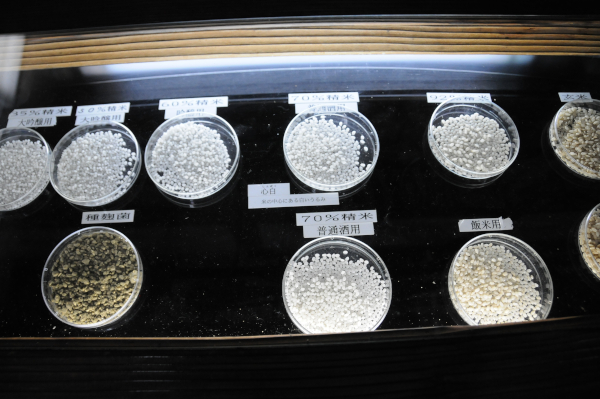
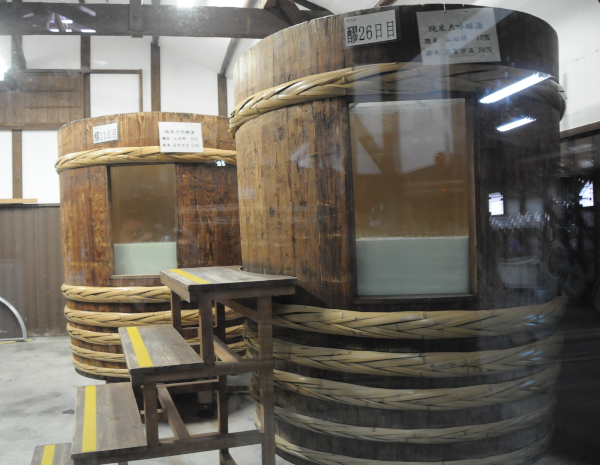
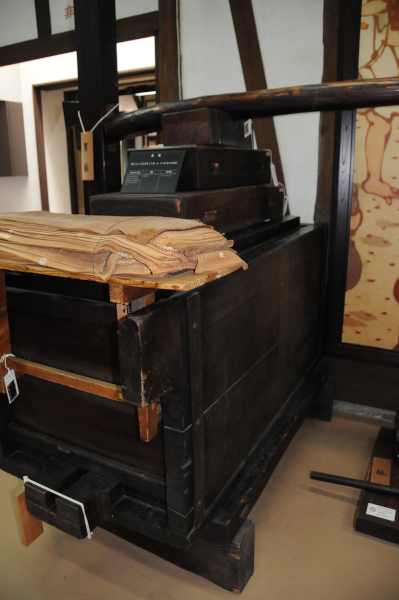
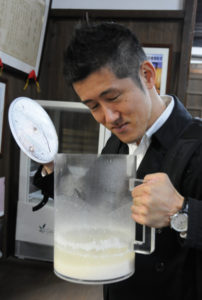
As I said, there were many things to do in the last couple of weeks, both for work and more private endeavours. For example, I went to a sake tasting in order to write about it, I visited some temple gardens I had never seen before (for future weekend posts here), and there was a free Noh performance I couldn’t pass up either (I hope I didn’t annoy people too much with my coughing). Also, I had to design mourning cards, write Christmas cards and buy New Year’s presents for my lawyer and accountant.

My standard workload has been crazy too. I am still writing about smartphones and there are texts about hotels as well, hotels that I could never afford, of course. Then I had visit the shrine and do the writeup for What’s up in Kyoto’s December highlight (for which I got the final ok only today), and decide about the new monthly highlights for next year (it will be something cute!). On top of that, I have been asked to make an audio version of a textbook in psychology, which I couldn’t work on for the last two weeks thanks to me sounding like a mountain ogre, so I need to catch up with this as well, and quickly too.

And all this on top of me being sick. I hope you can see why I had to drop a ball or two for a while. It’s gotten much cooler now, and although the days can be very nice and warm still, the nights are quite cold. Already in the beginning of November, I took the box with my winter clothing out of storage, but I didn’t have time (or energy) to make the final swap of summer/winter clothes, so I am literally clothing myself out of a box right now.

And, to add insult to injury, I must buy a new bicycle. The back wheel is bent beyond repair, and just today on my way to town, I lost my dynamo because a piece of plastic broke. Getting the bicycle repaired would be (almost) as expensive as buying a new one, so I have decided to ride the old one over winter (I promised to be very careful and not to ride too fast) and start spring with a nice and shiny bike. Or do you think I should make myself a Christmas present and buy the bicycle then? Actually, they have a very nice one at the shop there – in orange!

Checking in

Just a very short post to tell you that I’m still alive…

I’m having a cold and a quite bad cough for about a week now and although it is not let’s-stay-in-bed-for-days-and-suffer serious, I’ve still had to slow down considerably. My health is improving now, but of course, now I have to catch up with all the things I couldn’t do last week… I’ll be posting here again shortly. I hope.

Thanks for staying with me!

Writings…

I am doing a lot of writing right now. There is this blog, there is the What’s up in Kyoto website, there is a writing job I have taken about hotels, there are still the smartphones I talked about before, I want to redo my main business website, and then there are a few personal things I’d like to get written.

And then, it’s the end of the year, where three of my friends have their birthdays in December and of course we’re talking about Christmas cards and nengajo New Year’s cards as well. The birthday cards are no problem, and I have already bought Christmas cards for selected friends – the unselected ones get Christmas emails – and I need to make one Christmas card for a special friend of mine who likes handmade Christmas cards because she decorates her house with them. I think I sent her handmade Christmas cards for about 15 years already, and I see no reason to discontinue the tradition.

The nengajo are a bit more complicated though. They are always a pain to write for me because it’s customary to write addresses by hand, which goes very slowly. This year, since my grandmother has died, I thought I would get out of that because you’re not supposed to send nengajo in such cases according to Japanese customs. I was planning to send cards to business partners though, since they don’t know about my grandmother anyway.

Yellow Bird and Chrysanthemum on the rock by KakuteiHowever, Japanese customs are Japanese customs, and I have to adhere to them – instead of nengajo New Year’s cards, I have to send mochuu hagaki Mourning cards. They tell details about the deceased family member and also inform the recipients that “I am in mourning, so I will not send any New Year’s cards this year”. They are sent very early in December and are essentially meant to let the recipient know that they should not send a nengajo either.

Of course, Japanese customs are not my forte, so I asked a friend of mine how to go about writing those mochuu hagaki. First thing she did was to get her book about Japanese correspondence (yes, she IS Japanese!) where these things are detailed, and she picked out a very very short version of a mourning card. Since I am a foreigner and sending these to my friends only, she said I will get away with three simple lines: “My grandmother died on May 25th, she was 99 years old. I am sorry for not sending a New Year’s greeting this time.”

This last line is a standard formula, but this is not the only thing that’s standard here. For example, most Japanese post cards have preprinted fields for the post code and a field indicating the spot for the stamp, which are usually red – a sign of joy. In this case, these fields have to be black, obviously. Also, I should send the cards on an “unlucky” day to give the right impression, which this year means I must send them on Sunday, December 2nd. Sharp! Imagery is supposed to lean towards flowers like lotus, chrysanthemums etc. At least she said it’s okay if I just print them out, no handwriting necessary.

Yes, Japanese customs… If even Japanese need written instructions to get them right, how am I ever supposed to understand even a fraction of them?

The Key

The Key
Junichiro Tanizaki

Cover of "The Key" by Junichiro TanizakiIn our diaries, we may write our most intimate thoughts and desires, safe in the knowledge that no eyes other than ours will ever read them.

This is not the case for an elderly professor and his attractive young wife. Their married life has become dull and although they would never openly admit this to each other, they cannot suppress their desires for ever. So, each of them starts a diary to write about the things they cannot say openly. Although they carefully hide the books, they do expect the other to find and read it. The diaries, mutually read, soon provide the key to spice up their marriage, but things become rather complicated when Kimura, a young colleague of the professor’s arrives on the scene and arouses not only the daughter of the house but also the wife.

We read the entries of both diaries and follow the story of love and jealousy, sexual desires and their fulfillment. Both partners play their respective games, innocent in their talking, but highly dangerous in their writings. In the end the fire of their lust is all-consuming – was this what they wanted all along?

An interesting book, almost a psychological study. If you know something about your partner you shouldn’t know – how do you deal with it? Confront him openly? Get what you want – or what he wants – by sly manipulations? The end of the book comes with a shocking confession and nothing is what it seems…

Junichiro Tanizaki (1886 – 1965), born in Tokyo, was one of the most popular modern writers of Japan. He began his literary career in 1909, and only a year later, he was well-known in literary circles. Many of his writings have sexuality and desire as their focus. In 1923, when he moved to Kyoto after the great Kanto Earthquake that destroyed great parts of Tokyo and Yokohama, his career was boosted to new heights, and after WWII, he was regarded as Japan’s greatest contemporary author. In 1949, he won the Asahi Prize and was awarded the Japanese Order of Culture, and in 1964, he was elected as honorary member in the merican Academy and Institute of Arts and Letters, as the first Japanese writer. He died of a heart attack shortly before his 79th birthday.

Interested in spicing up your own marriage? Well, have a look what Tanizaki is doing here and get the book from amazon!